






From lakebed to legacy at Patria’s F-35 assembly and maintenance facility
6.2.2026
Text: Matti Remes
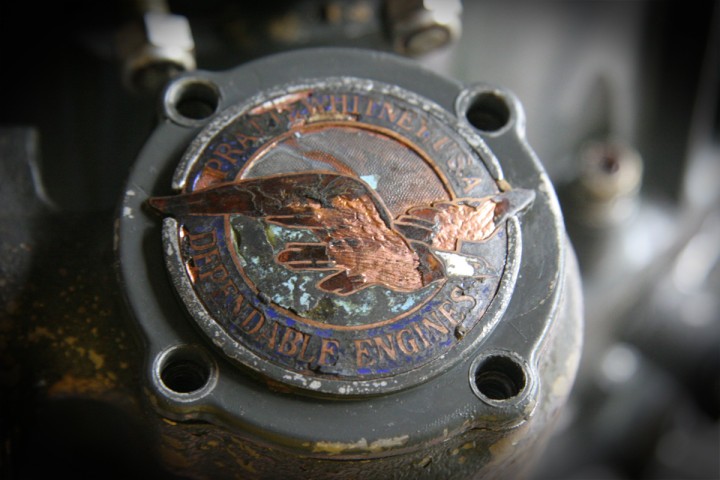
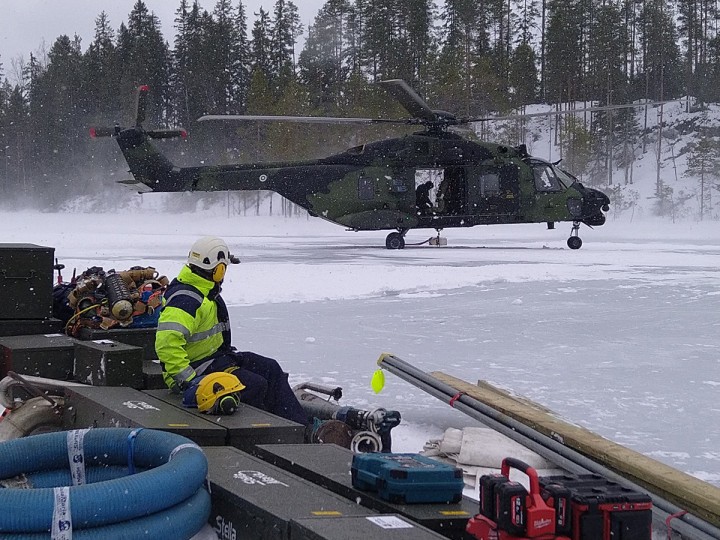
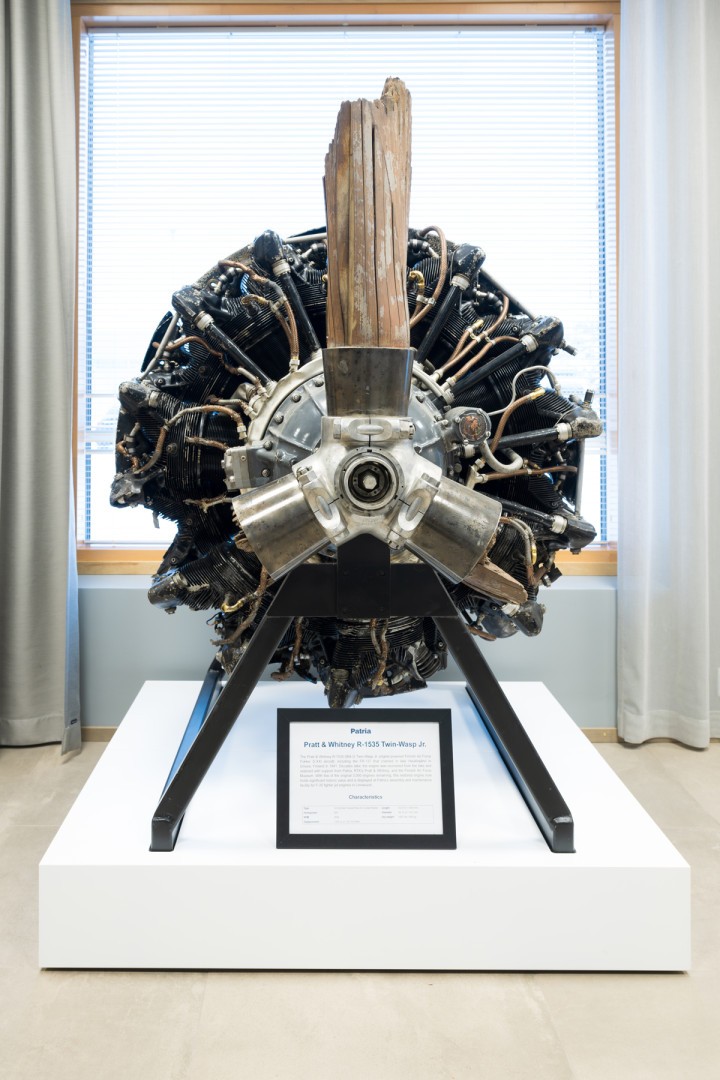
The Pratt & Whitney engine of a Fokker fighter that had crashed into a lake was retrieved in a challenging operation. This rare engine was given a place of honour at Patria’s Linnavuori site, which is responsible for the assembly and maintenance of the new F-35A fighters’ Pratt & Whitney engines.
Text: Matti Remes
Photos: Pekka Simula / Teija Soini, Fotosoini Oy; Main photo: Patria
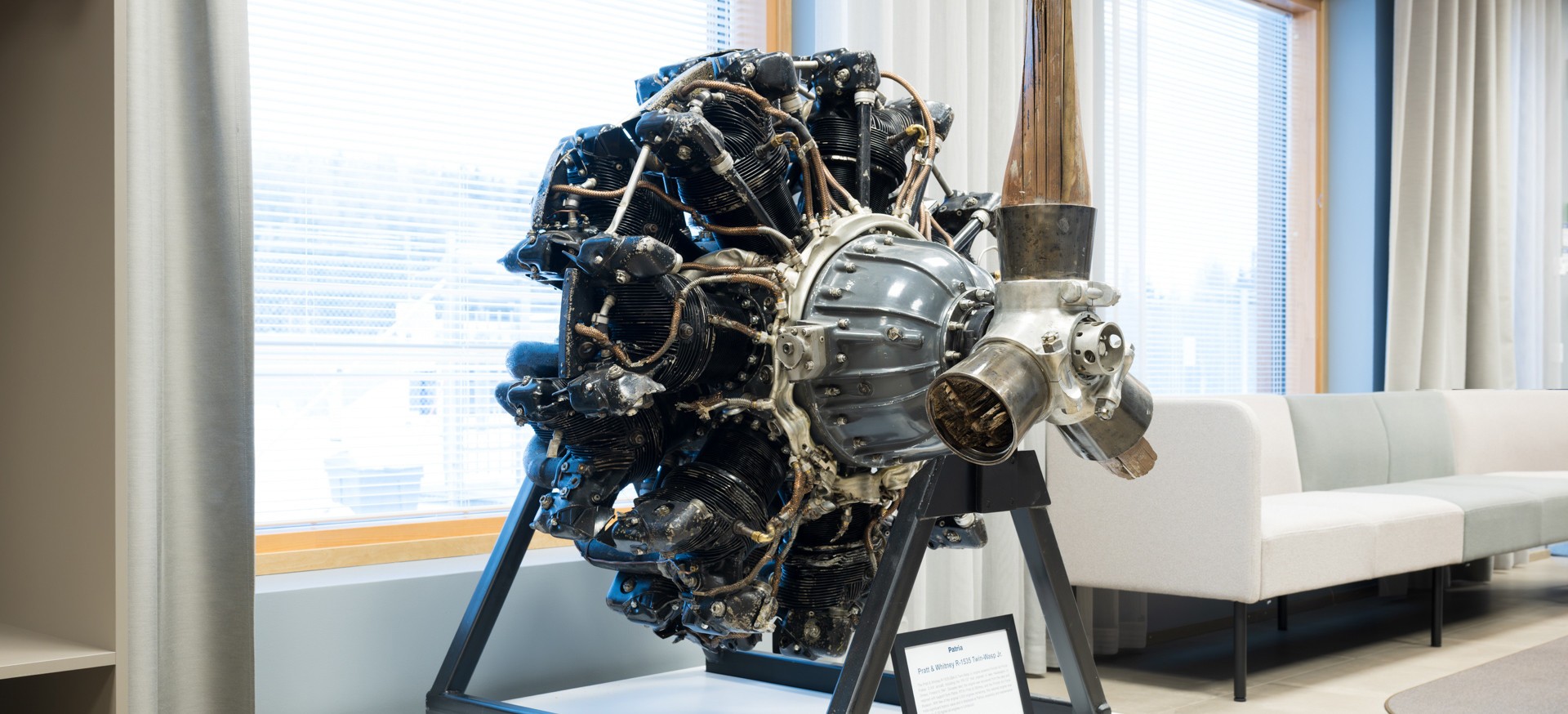
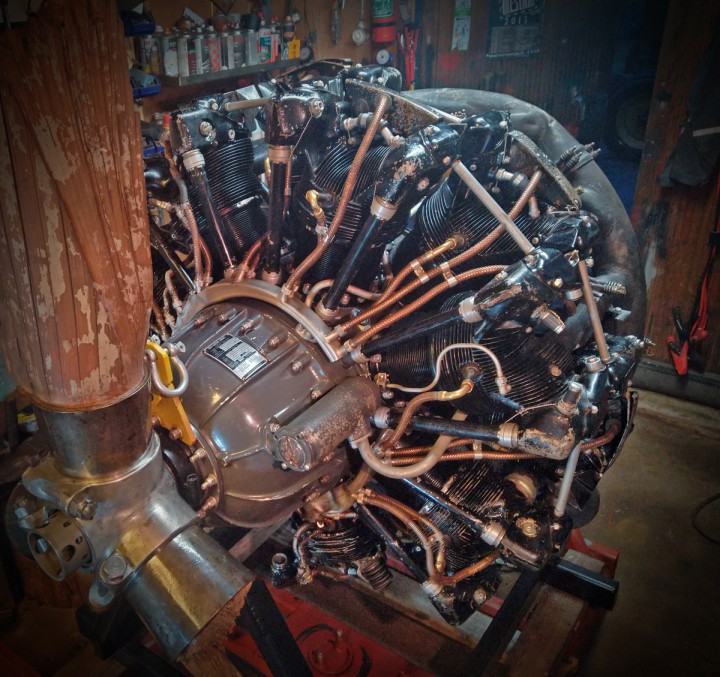
A milestone in aviation history was achieved at Patria’s Linnavuori facility in Nokia at the beginning of February, as a carefully restored Pratt & Whitney R-1535 Twin Wasp Jr double-row radial engine was put on display in the lobby.
The lifting and conservation project of the engine had to be planned with great care.
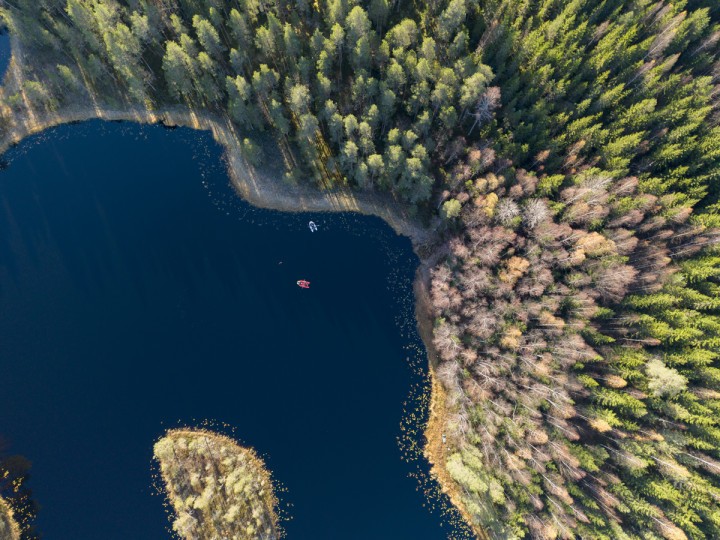
The engine originates from a Finnish Air Force Fokker fighter that crashed into lake Haukkajärvi in Orivesi in 1941. Having survived with minimal damage, the engine was decided to be lifted 85 years later through a demanding diving and helicopter operation.
– The lifting and conservation project of the engine, which weighed approximately 550 kilograms, was a multi-stage, challenging task that lasted more than three years in total. Its phases and logistics had to be planned with great care, explains Pekka Simula, the external specialist who led the project.
The engine rose from a depth of seven meters
The Fokker's deceased pilot was found in the water soon after the accident. In the 1980s, parts of the disintegrated aircraft were recovered, but the intact engine remained at the bottom of the lake at a depth of about seven metres.
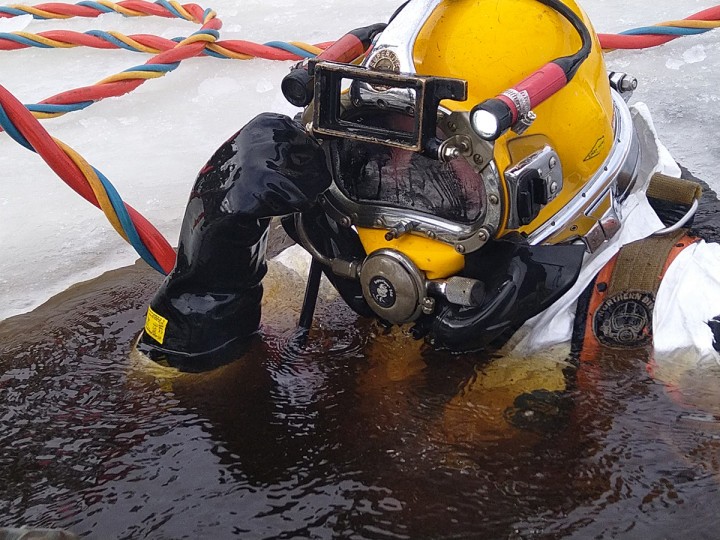
– The engine had sunk into soft bottom sediment, which first had to be cleared away using pumps. One of the challenges was the almost non-existent visibility, says Simula. .
With lifting straps threaded beneath the engine by a team of professional divers, and using a gantry crane, the engine was raised above the water surface and onto the ice. From there, the Finnish Defence Forces’ NH90 helicopter transported the engine to Millog’s facility in Siikakangas, which is part of the Patria Group.
– After preliminary cleaning, the engine was taken for conservation in Joensuu. Its overall good condition was a positive surprise. Some parts looked as though they had just come from the factory, Simula describes.
Motor's overall good condition was a positive surprise.
According to Simula, the conserved engine is of great value in aviation history, as it is a rare engine type. Only just under 3,000 R-1535 Twin Wasp Jr engines were manufactured worldwide in the 1930s and 1940s.
– Only a handful have survived to this day.
Patria made the lifting operation possible
The lifting operation, carried out in late winter 2025, was largely funded by Patria and the engine manufacturer Pratt & Whitney. Patria also supported the operational arrangements of the project. A key partner was the Military Museum of Finland, which provided the permit for working with old military material.
– Patria’s participation in the project was natural, as the Fokker fighter was manufactured at the State Aircraft Factory, Patria’s predecessor, says Patria’s Executive Vice President and retired Major General Engineer Kari Renko.
The lifting operationwas largely funded by Patria and the engine manufacturer Pratt & Whitney.
Patria’s aircraft history dates back to 1921. In its early years, the aircraft factory operated in Suomenlinna, Helsinki. In the mid-1930s, the factory moved to new premises in Härmälä, Tampere.
– During the war, production was decentralised to Kuorevesi, where the aircraft that crashed into the lake was also built, Renko shares.
The Linnavuori production unit was completed in 1943, and aircraft engine maintenance and repair began there the following year.
After the Second World War, the manufacture and maintenance of military aircraft was transferred to Valmet Aircraft Industry. In 1997, it became part of Patria, when several Finnish defence industry operators merged into one company.
The Linnavuori production unit was completed in 1943, and in 1997 it became part of the Patria Group.
History comes full circle now in Linnavuori
Kari Renko believes Linnavuori is an excellent location for the conserved engine, particularly as Pratt & Whitney will supply fighter engines for the Finnish Air Force’s future F-35A fighters.
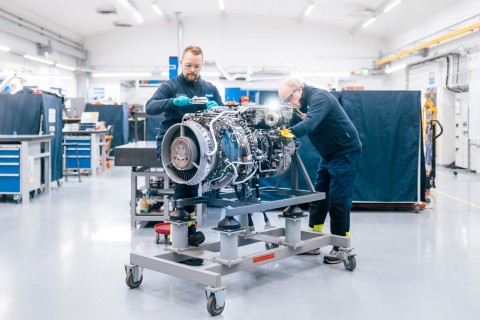
Patria is responsible for the assembly, maintenance and upkeep of Pratt & Whitney F135-PW-100 fighter engines in Linnavuori. For this purpose, new production facilities were built on the factory site, originally serving as engine assembly halls and later as maintenance spaces.
As the strategic partner of the Finnish Defence Forces, Patria is responsible for the maintenance of the F-35 fleet throughout the aircrafts’ entire life cycle.
‒ In a way, history comes full circle with Pratt & Whitney fighter engines returning to Finland. Since the Fokker fighters manufactured in the 1940s, such engines have not been in use by the Air Force. However, various types of Pratt & Whitney engines have been used in transport and liaison aircraft, says Renko.
Read more about Patria's history:
The foundation for a secure future
Read the news:
Patria and RTX’s Pratt & Whitney agree on final assembly of the first F135 fighter jet engines for Finland
What did you like about the article?
Thank you for your opinion! You can share the article on social media using the buttons below:
These articles might also interest you

Position
Location
Opening Date
Closing Date
Hämeenlinna, Finland
Opened
15.10.2026
Closing
30.10.2026
Opened
15.10.2026
Closing
30.10.2026
Hämeenlinna, Tampere, Finland
Opened
14.10.2026
Closing
30.10.2026
Opened
14.10.2026
Closing
30.10.2026
Vilnius, Lithuania
Opened
14.10.2026
Closing
05.11.2026
Opened
14.10.2026
Closing
05.11.2026
Tampere, Finland
Opened
14.10.2026
Closing
29.10.2026
Opened
14.10.2026
Closing
29.10.2026
Tampere, Finland
Opened
12.10.2026
Closing
27.10.2026
Opened
12.10.2026
Closing
27.10.2026
Hämeenlinna, Finland
Opened
11.10.2026
Closing
26.10.2026
Opened
11.10.2026
Closing
26.10.2026
Hämeenlinna, Finland
Opened
11.10.2026
Closing
26.10.2026
Opened
11.10.2026
Closing
26.10.2026
Tampere, Finland
Opened
11.10.2026
Closing
26.10.2026
Opened
11.10.2026
Closing
26.10.2026
Tampere, Jämsä, Finland
Opened
11.10.2026
Closing
26.10.2026
Opened
11.10.2026
Closing
26.10.2026
Freisen, Germany
Opened
11.10.2026
Closing
25.10.2026
Opened
11.10.2026
Closing
25.10.2026
Hämeenlinna, Finland
Opened
08.10.2026
Closing
23.10.2026
Opened
08.10.2026
Closing
23.10.2026
Hämeenlinna, Finland
Opened
08.10.2026
Closing
25.10.2026
Opened
08.10.2026
Closing
25.10.2026
Tampere, Finland
Opened
07.10.2026
Closing
22.10.2026
Opened
07.10.2026
Closing
22.10.2026
Hämeenlinna, Finland
Opened
06.10.2026
Closing
21.10.2026
Opened
06.10.2026
Closing
21.10.2026
Jämsä, Finland
Opened
06.10.2026
Closing
21.10.2026
Opened
06.10.2026
Closing
21.10.2026
Jämsä, Finland
Opened
06.10.2026
Closing
21.10.2026
Opened
06.10.2026
Closing
21.10.2026
Jämsä, Finland
Opened
06.10.2026
Closing
21.10.2026
Opened
06.10.2026
Closing
21.10.2026
Tampere, Finland
Opened
05.10.2026
Closing
20.10.2026
Opened
05.10.2026
Closing
20.10.2026
Tampere, Finland
Opened
05.10.2026
Closing
20.10.2026
Opened
05.10.2026
Closing
20.10.2026
Linnavuori, Finland
Opened
04.10.2026
Closing
19.10.2026
Opened
04.10.2026
Closing
19.10.2026
Hämeenlinna, Finland
Opened
04.10.2026
Closing
19.10.2026
Opened
04.10.2026
Closing
19.10.2026
Helsinki, Finland
Opened
04.10.2026
Closing
19.10.2026
Opened
04.10.2026
Closing
19.10.2026