
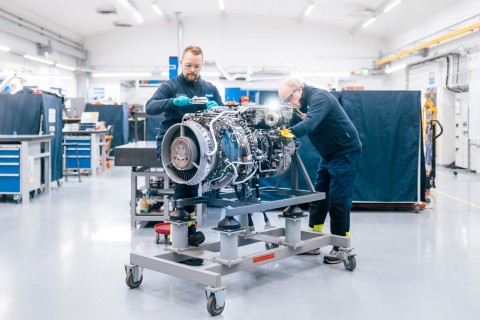










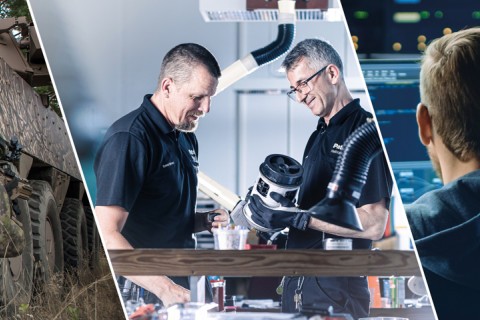





Nearly two-thirds of young people are drawn to defence precisely because of its purpose-driven nature.
Daniel Fiott, Professor, CSDS Brussels, VUB
High-end talent and skills have emerged as a decisive factor in Europe’s ability to convert greater spending into defence capabilities. Without a sufficient talent pool, the defence industrial base risks becoming a bottleneck rather than an enabler of security. The scale of the challenge is already visible. ASD Europe calculates that the European defence industry employs roughly 581,000 people, yet demand for labour has surged sharply since 2022, with job postings remaining over 40% higher than pre-war levels.
Firms in Europe report persistent difficulties in recruiting engineers, technicians and digital specialists, even as governments pledge hundreds of billions in additional defence spending. The European Commission openly recognises skills shortages as a structural constraint, warning that gaps in the labour market threaten Europe’s security. Eurostat indicates that the median age of the workforce in hightech manufacturing in Europe is about 42 to 44 years of age, so it is imperative that younger talent pools are tapped for the defence sector in the years ahead.
The challenge is not just about numbers.
Defence increasingly depends on advanced AI skills that are also in high demand in civilian sectors, intensifying competition for talent. Years of underinvestment, an ageing workforce and fragmented training systems have further strained the pool of specialised skills. While one estimate states that around 0.41% of Europe’s workforce are AI professionals, Europe continues to train talent in science, technology, engineering, and mathematics subjects (STEM) that it struggles to retain, as they leave Europe.
Material incentives, personal motivations and societal factors shape the decisions of young graduates seeking work in the defence sector. Economic security remains key as studies consistently show that salary, job stability and structured career progression rank among the most significant motivations.
What is more, patriotism, public service and the desire to contribute to collective security are key factors in drawing talent and skills to the defence sector. More recent evidence suggests that nearly two-thirds of young people are drawn to defence precisely because of its purpose-driven nature, reflecting a broader shift in Europe’s “peace dividend” culture.
Beyond these core drivers, personal development and social context are important in shaping recruitment. Defence careers offer distinct opportunities for skills acquisition, leadership training and exposure to advanced technologies, all of which are highly valued by graduates.
However, individual decisions are also strongly influenced by family background, peer networks and prior exposure to the military and/or defence sector. In Europe, the decline of conscription over the past decades has reduced these opportunities, contributing to lower awareness of defence careers among younger cohorts.
Addressing the workforce challenge requires more than labour policies. In fact, what is needed is a broader strategic approach to talent that mirrors Europe’s defence ambitions.
Naturally, it will help if the defence sector is perceived as a competitive and attractive employer. This entails not only competitive wages, but also clearer career progression, mobility between civilian and military industries and a stronger narrative linking defence as a public good and technological innovation. The dual-use nature of many defence technologies offers an opportunity here. By emphasising cross-sector careers, firms can tap into wider labour pools.
The European Union has an important role in shaping the defence skills ecosystem. It has already begun to act, notably through plans to reskill up to 600,000 workers by 2030, but industry and member states are acting. Some companies in the industry have already shifted their hiring approach as the overall business model has evolved, pushing for more trainee programmes and academies, recruiting specialists from like-minded peers and offering careers that can contribute to national security as well as economic growth. Countries such as France, Germany and Poland are all offering new apprenticeship schemes to make it easier for younger people to join the sector, investing in new start-up funds to drive recruitment and offering clearer pathways between military, tech and defence sector positions.
Nearly two-thirds of young people are drawn to defence precisely because of its purpose-driven nature.

Europe needs to treat skills as a core component of defence readiness – the bottom line is simple, without people we cannot produce the defence Europe desperately needs. Ultimately, this requires clear targets for education, training and recruitment across key technological domains and capability areas. Here, there is a need to better understand what the European defence sector’s talent needs will be in the coming years as defence budgets and demand increase. And here, Europe requires a stronger alignment between education systems and defence needs, including expanded STEM programmes, vocational training and technical apprenticeships tailored to defence-specific applications.
Europe still struggles to form coherent education and career strategies between its defence firms and universities and technical colleges. Educational institutions will be the repositories of much of Europe’s young innovators and technicians, but they are still largely disconnected from defence.
We know that young graduates are highly mobile individuals too, so there is a need to emphasise labour mobility in Europe’s defence sector. However, without increasing the overall talent pool for the defence sector across the Union, firms will compete for talent in a shallow pool of candidates. In this sense, the defence labour market is a strategic domain in its own right and core to Europe’s rearmament.