




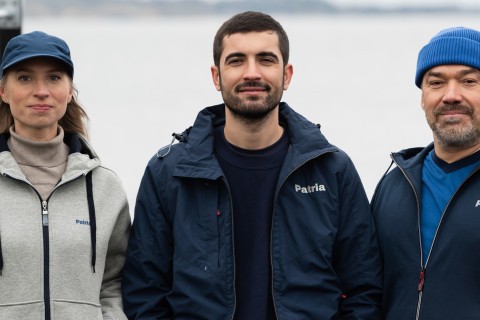
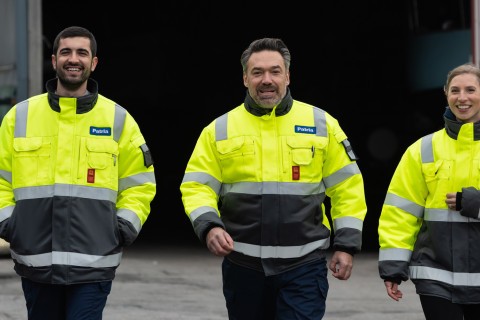
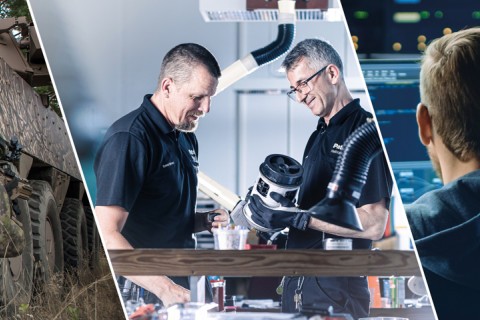
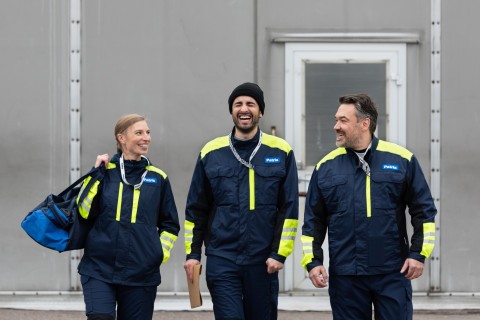



Finland’s comprehensive security model is centred around a whole-of-society approach. Public and private players perform as important a role in national security as the armed forces, with each informed of their role for when a crisis occurs.
Text: Matt Lynes, Editor of The Resilient at Ingeniøren
Photos: Patria
Preparedness was part of Finland’s lexicon long before it became mainstream. What was once seen as its greatest weakness – a 1,340 kilometre border with Russia – has proven to be its greatest strength. As Europe prepares for conflict, Finland has become a leading light.
Finland has never truly been at ease with its troublesome neighbour, and has been preparing to deal with the Kremlin since long before the fall of the Soviet Union. Its comprehensive security model serves as the gold standard across Europe.
It’s no coincidence that the country’s former President Sauli Niinistö conducted the EU’s flagship report on civil and military preparedness and readiness. The report, released in late 2024, now serves as a foundation for crucial discussions on European defence and preparedness policy.
– In many Polish political discussions, Finland is held as a gold standard. Often a question is stated like why Finland can have this high level of civilian preparedness for a potential armed conflict and we do not, says Sebastian Czub, coordinator of the defence programme at the Casimir Pulaski Foundation, a Polish think tank.
Finland’s comprehensive security model is centred around a whole-of-society approach. Public and private players perform as important a role in national security as the armed forces, with each informed of their role for when a crisis occurs.
– While security is a fundamental right, every individual also has a responsibility to contribute to it according to their abilities as a part of society, explains Seppo Kolehmainen, Patria’s Vice President of Public Safety and Finland’s former National Police Commissioner.
–This is about more than cooperation on paper. It is a network where information flows rapidly and actors know each other before a crisis occurs, he adds.
This has driven long-term investment in emergency infrastructure. Around 50,000 bunkers and shelters can house up to 80% of the population, with some offering cafes, gyms and sports halls. This has inspired others.
Poland, for one, has followed Finland’s lead. Sharing its own borders with Russia and Belarus, it has had to deal with drone incursions, weaponised migration and more.
After a visit to Helsinki’s Merihaka shelter in September 2025, President Karol Nawrocki accelerated calls for action.
– It is crucial for Poland and its people that we implement these mechanisms and use information about Finnish civil defence, he said.
This boost was spurred on by a report from Poland’s Supreme Audit Office. It revealed that less than 4% of the Polish population had access to emergency shelters or bunkers, with most infrastructure built in the Soviet era and left to ruin. Since then, the country has acted.
– A few years back no one even mentioned civilian protection or civil defence... and now it’s becoming the headline. We talk about civilians, we talk about protecting civilians, we talk about engaging society, this whole-of-society approach, said Czub.
After a period of rearmament which saw it lead Europe in defence spending, the country looked to Finland and passed its Civil Protection Act and Civil Defence Act in December 2025. New infrastructure projects have since been announced under the Population Protection and Civil Defence Plan. This has provided over €1 billion to support local governments in refurbishing old shelters and building new ones, with a particular focus on the high-risk eastern regions of Poland.
Communicating this has seen the country switch to a total defence model.
– Poland is trying to encourage this total defence concept… I think it’s becoming the standard for what we want the entire system to be, said Czub.
Citizens can find their nearest shelter on a government app “Where to hide.” Earlier this year, the government also distributed a guide to all citizens, with instructions of what to do in a crisis. According to Czub, this is a positive step.
– I think this is one of the better things they did. Obviously there are gaps and it doesn’t cover everything, but I think it’s very effective.
Following the end of the Cold War, Finland’s neighbour Sweden chose to focus on peace rather than preparedness and slashed its military and civil defence.
But Russia’s invasions of Ukraine in 2014 and 2022 rebooted the programme, and Finland provided a blueprint.
The revival of total defence has been central to this reboot, involving citizens and soldiers. Over €3 billion has been promised under the total defence bill passed in October 2024, with funds to be spent on ensuring that every individual is protected and understands their role in a crisis.
– This is a powerful defence resolution that will give the total defence more strength and better balance. Now the efforts to step up the pace of the defence’s growth continue, said Sweden’s Minister for Defence Pål Jonson in 2024.
Like in Finland, conscription and civil service has been reintroduced. In case of exceptional circumstances, all Swedish residents must contribute to total defence from the age of 16 to 70. While some have undertaken military training and joined the army reserves, the government also launched a civilian service for the municipal rescue service and the electricity supply sector. Those with the necessary basic skills can be enrolled and deployed on civilian duty, ensuring the resilience of the country’s critical infrastructure.

With countries looking north to Finland, Helsinki must make sure that its preparedness plans develop in line with evolving threats. Hybrid warfare, disruption to supply chains and new technologies have forced the country to modernise its plans.
Forging strategic partnerships with players like Patria – in which the Finnish government holds a 50.1% majority share – is central to this evolution.
Patria, for example, has a strategic partnership with the Finnish Defence Forces, and can act as a bridge between government strategy and industrial execution within this whole of society approach.
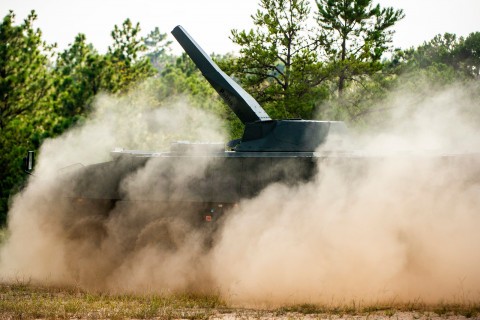
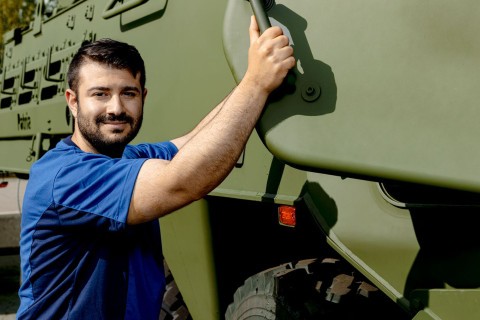
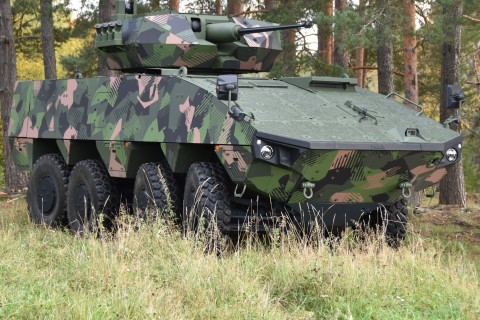
The Common Armoured Vehicle System (CAVS) programme is one such project that has developed from this. Rather than operating a simple export model, the programme focuses on interoperability and European cooperation.
Vehicles are manufactured within the purchasing countries so that country-specific modifications can be made, but also ensure that nations are stronger together and maintain the local skills and industrial base needed for their own security.
This collaborative approach helps to keep industry up to date so that planning can be done to meet pressing needs.
– It is a win-win situation: authorities gain up-to-date information and access to private-sector resources, while companies receive early warnings, guidance, and support. Trust is the foundation of everything, and cooperation strengthens it – especially in times of crises, says Kolehmainen.
Being open with the public has also helped to build resilience and trust. Without it, preparedness plans risk remaining glossy pieces of legislation with little real-world impact. For Finland, this would be a worstcase scenario.
– Preparedness is not seen as theoretical, but as practical and necessary, concludes Kolehmainen.