







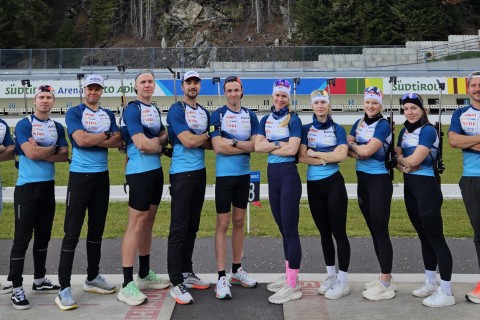

We need vehicles where situational awareness, connectivity and digital architecture allow integration of systems regardless of the communication link, says Kari Renko, Patria’s Executive Vice President of Strategic Programs.
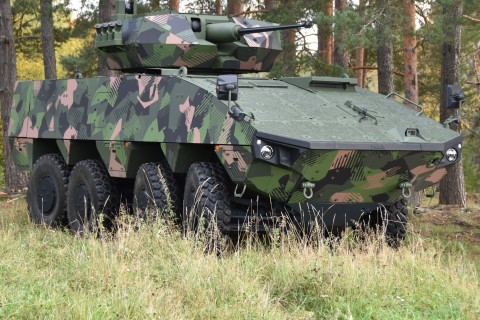
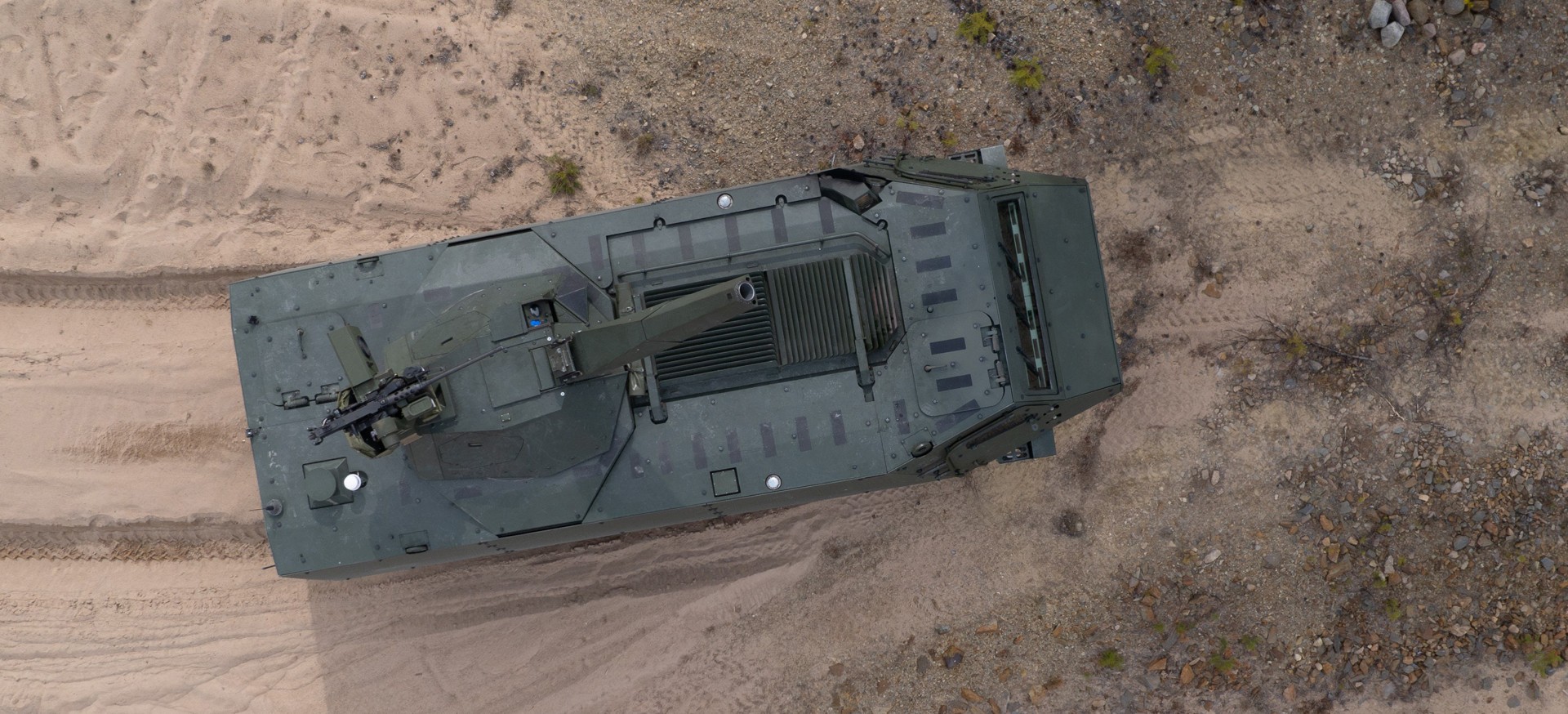
Jan Erola, Nordic Defence Review
– At the operational level, Ukraine is fighting a war of attrition, says Kari Renko, Patria’s Executive Vice President of Strategic Programs.
– Russian tactics rely on artillery to grind openings in the front, followed by armour and infantry. If it fails, they repeat.
The pattern is historical. It is striking how similar this is to what was done in the 1940s.
– For NATO countries, the conclusion is: We cannot afford that kind of war, Renko says.
The alternative is manoeuvre, built on shared situational awareness and coordinated effects. “Units must have a shared picture of the battlefield and be able to act from movement, even at brigade level.” This is the practical meaning of multidomain operations, where sensors, fires and manoeuvre operate as a single system.That requirement drives industrial change.
– We need vehicles where situational awareness, connectivity and digital architecture allow integration of systems regardless of the communication link, Renko says. The value lies in integration.There is a danger of drawing false conclusions from Ukraine.
– If we copy Ukrainian solutions one-to-one without understanding doctrine, we risk getting it wrong, Renko cautions.
Drone dominance, for example, may reflect necessity as much as superiority.
– Would it be more effective to use artillery? he asks. The answer depends on context, logistics and doctrine.
This tension defines the broader Western debate. The war has accelerated innovation, but it has also exposed the limits of technology-first thinking.
– Future wars will not be the same as the last one, but they will not be the same as this one either, Renko underlines the point.
The requirement is flexibility and rapid adaptation.
Environment sharpens the distinction. Finland’s operating conditions differ fundamentally from Ukraine’s.
– We have forests, limited visibility, extreme cold, humidity and four distinct seasons, Renko says.
Technical systems must survive frozen hydraulics, degraded sensors and disrupted navigation.
– If it works here, it works almost anywhere.
The war has also reintroduced duration as a defining factor.
– A prolonged conflict lasting years is back on the table, Renko says.
This shifts the focus from procurement to sustainment. Industrial capacity, logistics and innovation cycles become decisive. Drones illustrate this shift. Ukraine has used them at scale, with rapid iteration cycles driven by frontline feedback.
– New technology replaces itself in three months, Renko says. The battlefield operates as a continuous development loop. Volume finances innovation.
Western systems struggle to match this pace. Procurement remains slow. Volumes are limited. Funding mechanisms support early innovation but rarely scale production. The result is a structural gap between development and deployment.
The answer, Renko argues, lies in integration.
– Who integrates system of systems into defence?
His answer is established defence companies with access to classified environments and the ability to productise innovation. This is where Patria positions itself.
The company’s eALLIANCE ecosystem, developed with Business Finland, reflects this approach. It connects startups, research institutions and industry into a staged pipeline. Early concepts are tested in open environments. Successful solutions move into secure integration.
– We need an innovation system where you can fail fast or succeed fast, Renko says.
This model mirrors, in part, US approaches such as DARPA, but adapts them to a Nordic context where scale is limited.
– Finland’s smaller size can be turned into a strength, Renko notes.
Agility compensates for mass. According to Patria’s Chief of Technology Matti Saarikko, the lesson in technology perspective is restraint. He emphasises long-term thinking over hype.
– My role is to build roadmaps, not to hype the latest technology, he says. The challenge is to understand why technologies emerge and whether they will remain relevant.
Ukraine provides a case study.
– Drones are effective, but also reflect constraints, Saarikko notes.
Limited ammunition and resources shape tactical choices.
– If they had unlimited ammunition, they might use it instead. This reinforces a broader principle: new systems complement rather than replace existing ones. People still need to move on the battlefield, Saarikko says.
– I still believe those people will be there.
Armoured vehicles, aircraft and traditional systems retain their role, even as their function evolves.

Mobility is a central lesson. Training environments often mask reality.
– In exercises, you drive on prepared routes. In war, the same terrain may be used dozens or hundreds of times, Saarikko notes.
The result is degradation. Mud becomes a decisive factor, echoing the experience of the Second World War, the German army’s tanks and trucks stuck in muddy fields of the eastern front.
– This is something easily forgotten.
This insight feeds directly into development. Soft terrain capability, including tracked systems like with Patria TRACKX, becomes critical. Understanding terrain requires data. Saarikko points to civilian sources. Forestry data, for example, provides detailed information on soil conditions, moisture and mobility constraints. This kind of integration extends operational awareness beyond traditional military inputs. Ukraine also reinforces the importance of networks.
– There is no single decisive system, Saarikko says. Effect comes from interconnected systems.
This aligns with the evolution of battle management systems, where data from multiple sources is fused into a shared operational picture. At the same time, absence is instructive. Ground robotics, despite heavy discussion, remain limited in large-scale deployment.
– There are individual examples, but not widespread use, Saarikko reminds, pointing to both the technical challenges and the future opportunity.
The war is also reshaping how cooperation happens. Visiting an eALLIANCE event in Tampere in February 2026, Andrii Makhnyk delivered a message to Finnish and all western companies.
– Be more active, come to Ukraine.Germany has already moved ahead, building structured cooperation models with Ukrainian startups. The Nordic countries are still catching up. The most important thing is to move faster, Makhnyk said. We have three to six months innovation cycles.
Products developed outside this loop risk irrelevance.
– If it’s not tested in Ukraine, it’s not fitted for current warfare.
Collaboration does not begin with frameworks or long negotiations. It begins with action.
– Just meet, discuss, test and continue. There is no need for thousands of meetings, just one meeting.
Ukraine hosts more than a thousand defence startups, many working in direct contact with frontline units. They generate immediate feedback from real battlefield use, something no peacetime environment can replicate. Western industry brings integration, certification and access to broader markets.
– It is a win-win situation, Makhnyk pointed out.
The early engagement of the German model has created a functioning pipeline between Ukrainian innovation and Western defence structures. Finland is now building a similar approach through initiatives such as eALLIANCE, supported by Business Finland and industry players like Patria.
– We see the ice slowly breaking, Makhnyk noted.
Time is not measured in budgets or programmes, but in consequences. Delay has a direct cost.
– The more we hesitate, the more people are dying.