Will Europe’s defence build-up drive economic growth
27.10.2026
Finland’s defence industry turned over more than €4bn last year, up around 40%. The sector aims to reach €12bn by 2030, potentially lifting direct employment from 15,000 to 40,000 and indirect jobs from 35,000 to 100,000. Patria executive Jussi Järvinen believes even these targets may be too modest. Reaching them will require faster export growth, access for new entrants and stronger government support for industry.
Jan Erola, Nordic Defence Review
Jussi Järvinen, Executive Vice President of Patria's Protected Mobility business area, was referring to targets set by industry association PIA in December 2025. “If we were setting the target now, it might be a little higher,” he told the Europe Forum in Turku. Patria’s vehicle business has grown 2.5-fold in two years, and exports are expected to generate 95% of its turnover next year.
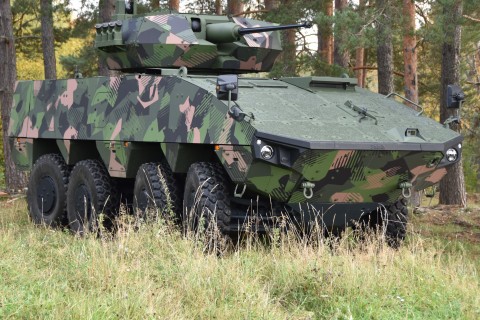
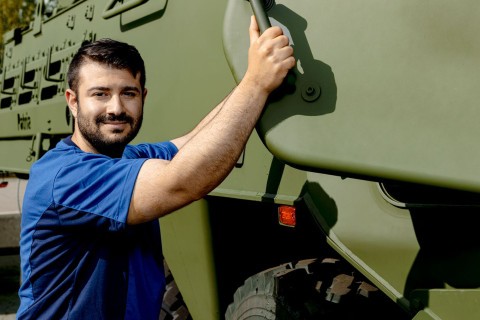
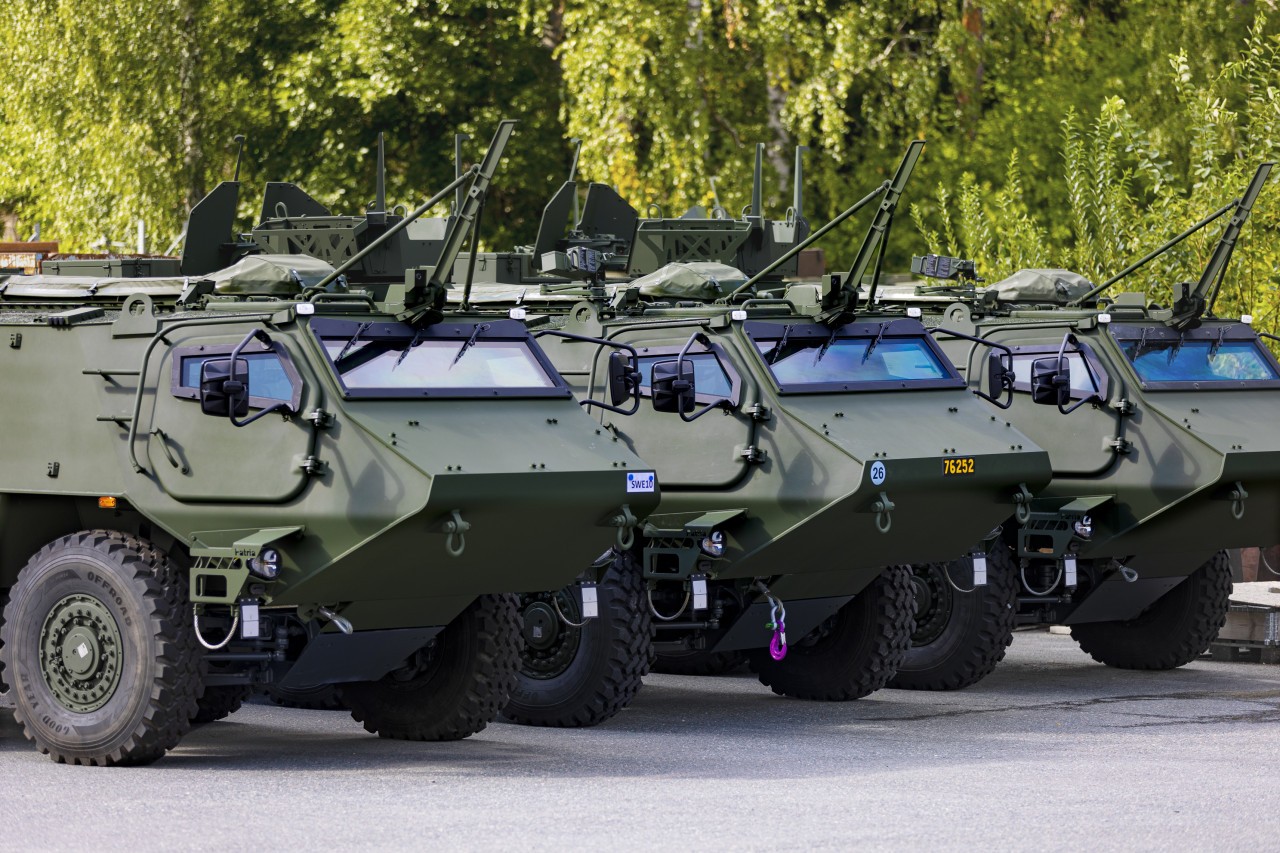
Central to this growth is the Common Armoured Vehicle System (CAVS) programme, based on Patria’s 6x6 armoured vehicle. Seven countries are buying the vehicles, according to Järvinen. Patria’s model relies on local production in customer countries, strengthening their security of supply and expanding its supplier network. Finland retains design expertise and long-term maintenance and lifecycle business.
“For the past 25 years, we have relied on local production. It is a way to strengthen security of supply in the customer country,” Järvinen said. Shared equipment improves interoperability among NATO forces and ties participating states together for 30 to 50 years. Patria also sees CAVS as a foreign-policy asset.
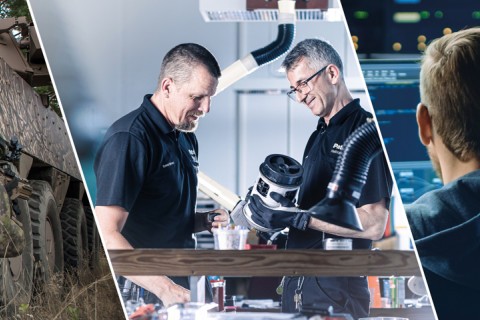
The Finnish-led CAVS programme is based on Patria 6x6 armoured vehicle.
Growth extends beyond prime contractors. Patria has around 60 Finnish subcontractors and is bringing civilian businesses and start-ups into defence through the Business Finland-backed eALLIANCE programme. Small design firms have helped apply lessons from Ukraine rapidly to vehicle development. Opportunities range from software and electronics to sensors, autonomous systems and materials.
Antti Kaikkonen, Centre Party leader and former defence minister, stressed the importance of Finnish Defence Forces orders for smaller firms. “References from the Defence Forces are extremely important for our domestic companies, particularly those that are not yet very large.” A first domestic contract can open export markets while strengthening Finland’s security of supply.
Government backing opens doors
Defence exports depend heavily on political decisions and access to foreign governments. Järvinen said Finland’s export-promotion capacity falls far short of its industrial ambitions. “We need those introductions and high-level support wherever we can get them. But they are very thinly resourced.”
EU funding can help unlock investment. Timo Pesonen, director-general of the European Commission’s defence industry and space department, described EU support as “seed funding” capable of triggering much larger private investments. The ASAP programme has helped ease ammunition production bottlenecks. Finland must prepare for the EU funding period beginning in 2028.
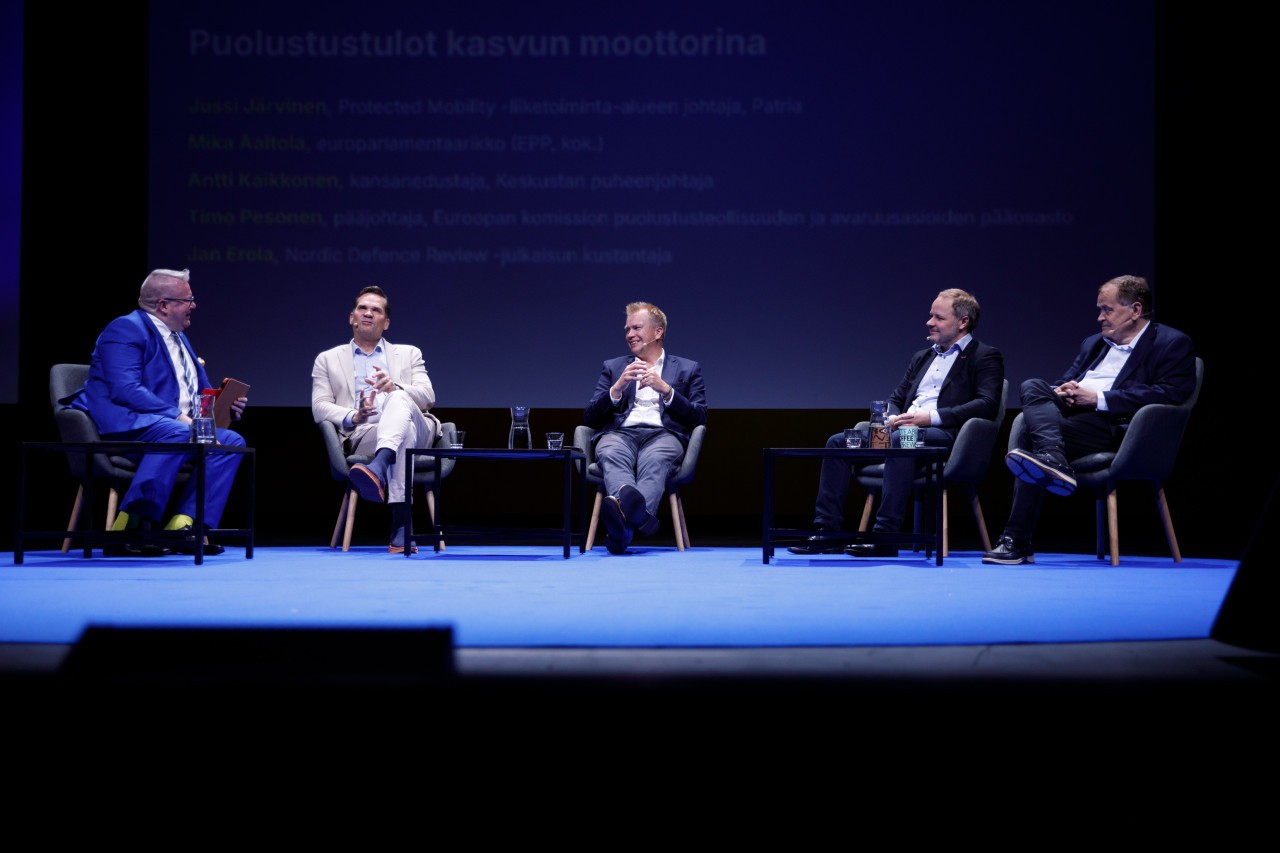
From left: moderator Jan Erola and panellists Mika Aaltola, Antti Kaikkonen, Jussi Järvinen and Timo Pesonen during the “Defence Spending as a Driver of Growth” panel discussion at Europe Forum. Photo: Jaska Poikonen.
Orders and investment must move faster. MEP Mika Aaltola noted that drones and other weapons in Ukraine evolve within months, while European procurement often takes years. He questioned whether Europe had the people, resources and readiness to match that pace. “Doubling or tripling is not enough. We need to increase production a hundredfold,” he argued.
Small investments, major gains
Kaikkonen said Finland’s defence procurement organisation was overstretched. “Even a handful more people there could make a big difference.” Factory permits also need to move faster. He cited Forcit’s planned explosives plant in Satakunta as the sort of project that should not be delayed for years. Järvinen said permits for Patria’s roughly €50m investments in Hämeenlinna had progressed quickly.
Eastern Finland could also benefit. NATO’s 5% defence spending target includes 1.5 percentage points for security-related investment, potentially including transport links for military mobility. Kaikkonen said better east-west connections would also support the regional economy. “A thriving eastern Finland matters for the security of Europe as a whole.” Aaltola saw defence manufacturing as an opportunity for areas hit by the collapse of trade with Russia: “What could be a more natural new Nokia for Finland than the defence industry?”
Europe risks missing the economic benefits of rearmament if it buys too much abroad. In a question from the floor, Janne Ronkainen of the Industrial Union cited an estimate that up to 78% of European defence procurement spending goes outside Europe, casting doubt on how much Finland’s defence industry could actually benefit from rising defence budgets. Aaltola urged Europe to favour European production in jointly financed purchases. Kaikkonen stressed that performance and availability must come first.
Finland must ensure that European markets remain open to competition.
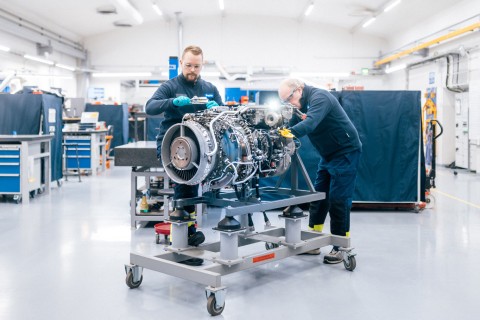
Järvinen noted that buying foreign systems can still create Finnish jobs. Patria is producing around 400 forward fuselages for F-35 fighters in Jämsä and assembling their engines in Finland, alongside decades of maintenance work. Open competition across Europe is vital for suppliers from smaller countries. “Finland must ensure that European markets remain open to competition,” he said.
Delivery will determine whether Finland meets its defence industry ambitions: stronger export promotion, quicker purchasing and permits, more firms entering supply chains and enough skilled workers. “Now we must move from words to action,” Kaikkonen said. European rearmament offers the market. Finland must turn those orders into domestic production, technology and jobs.
What did you like about the article?
Thank you for your opinion! You can share the article on social media using the buttons below: