Patria’s international competence centre expands in Latvia
9.11.2026
Patria’s armoured vehicle production in Latvia is growing rapidly. At the same time, the activities of Patria’s international competence centre are expanding to include the assembly of new vehicle types and lifecycle services.
Text: Matti Remes
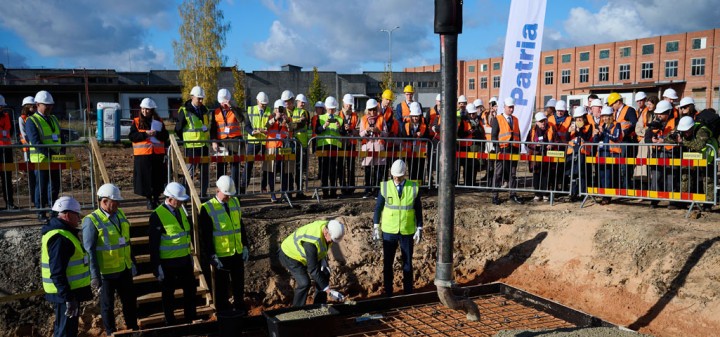
Patria’s armoured vehicle production in Latvia took another step forward in October, when the foundation stone was laid for a new production facility at the Valmiera Industrial and Export Park.
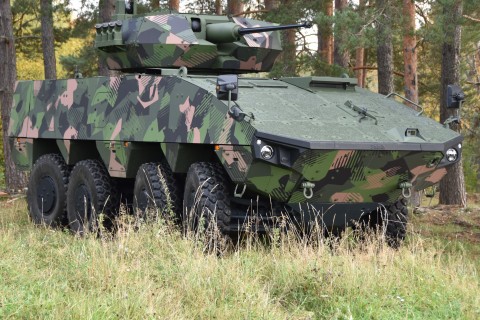
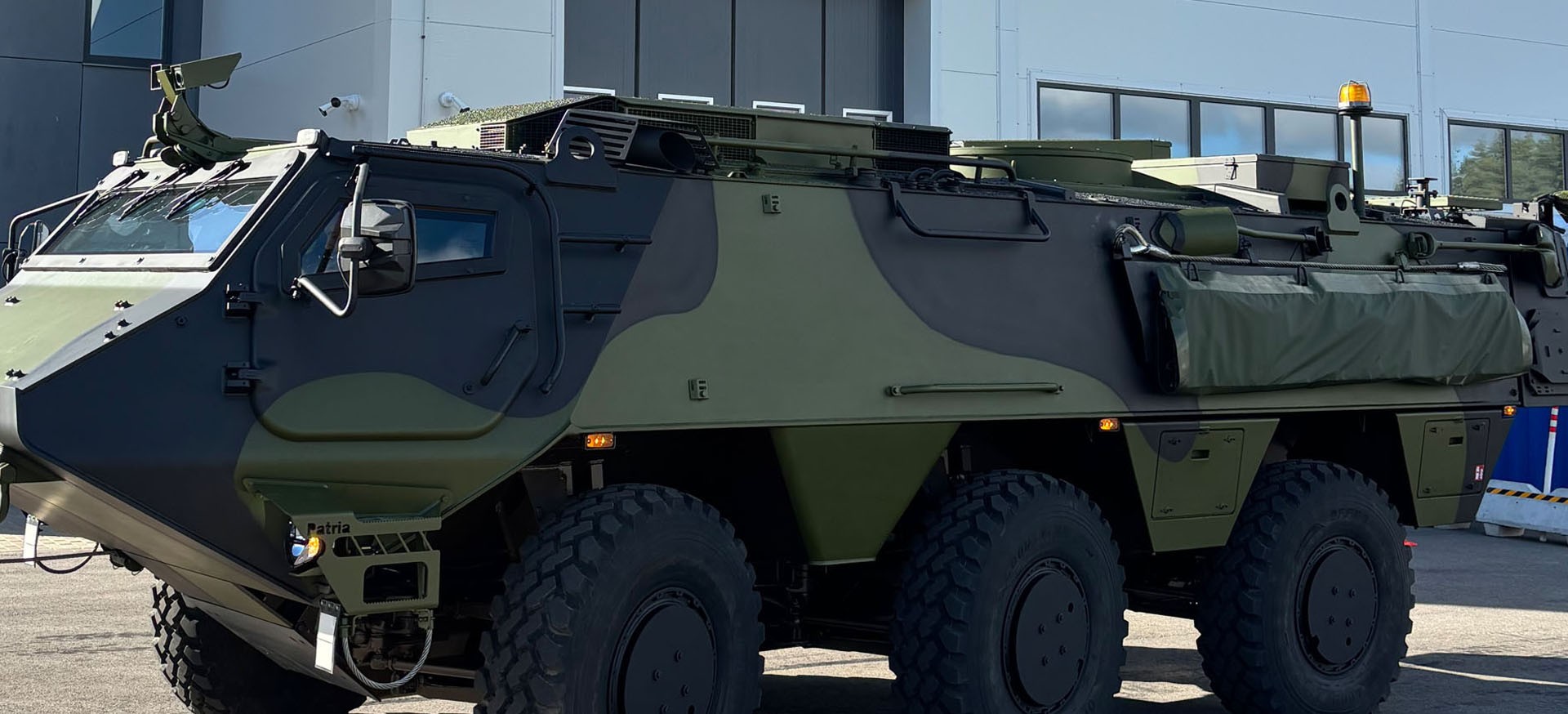
The production facility being built next to the existing factory will enable the assembly of new vehicle types and the expansion of vehicle maintenance and lifecycle services. The new space arrangements will also allow production of Patria 6x6 vehicles to increase.
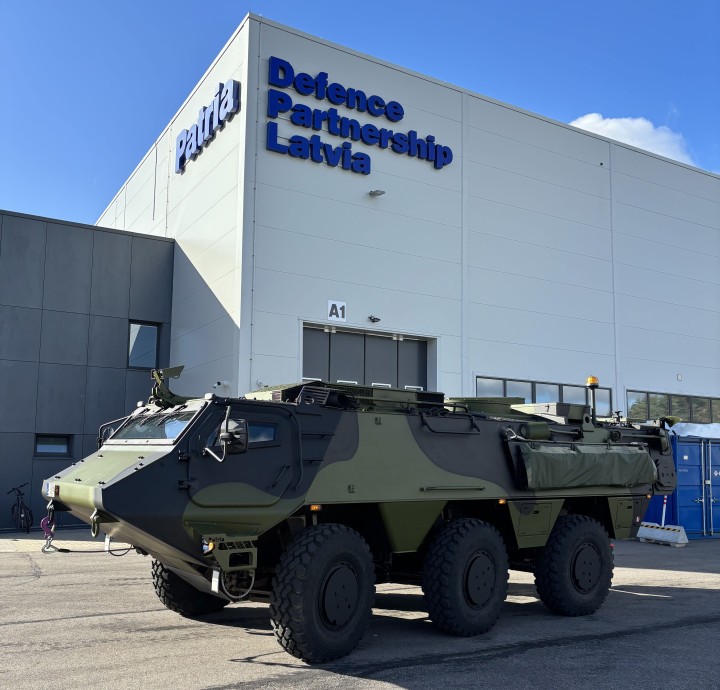
Opened in 2024, the Valmiera factory has become an important part of Patria’s international armoured vehicle production network.
Production of the 6x6 vehicles is carried out by Defence Partnership Latvia (DPL), which became a wholly owned Patria company in August 2026. Previously, Patria held a 70 per cent stake in the company, while the Latvian company Unitruck owned 30 per cent.
On 7 October, the foundation stone was laid for the new Patria Latvia military vehicle production facility at the Valmiera Industrial and Export Park.
Vehicle production growing rapidly
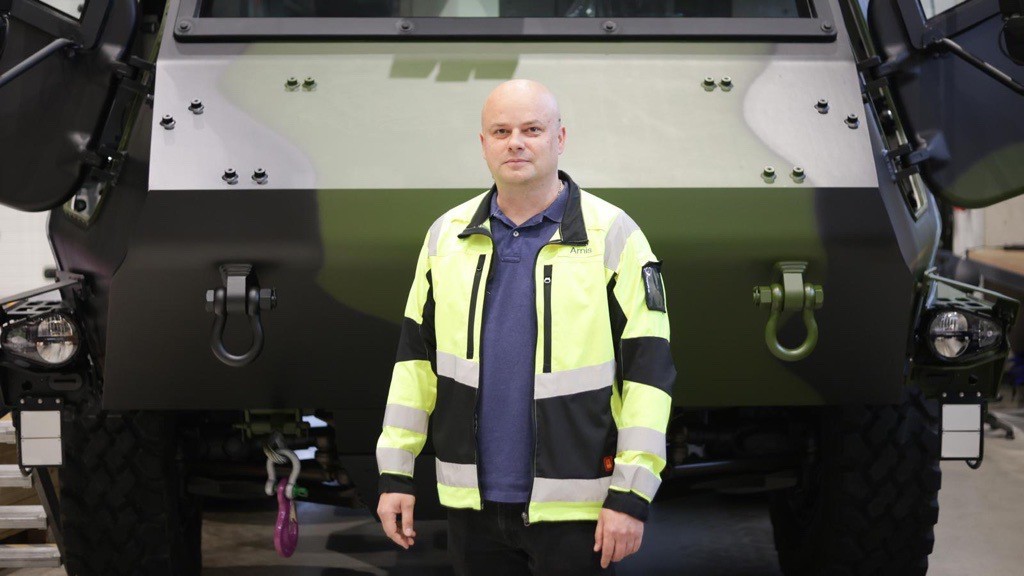
Arnis Irbens, Site Director at Defence Partnership Latvia, says that production volumes of Patria 6x6 vehicles have grown rapidly. Around 100 Patria 6x6 vehicles are currently manufactured in Valmiera each year. The next target is to increase production capacity to 150 vehicles a year.
“The original goal was to manufacture around 30 vehicles a year for the Latvian National Armed Forces. We are now moving towards five times that production capacity,” Irbens explains.
Growth is being driven by the expansion of Patria’s multinational CAVS vehicle programme and the accession of new countries. CAVS (Common Armoured Vehicle System) is an international programme initiated by Finland, in which participating countries develop and procure armoured vehicles based on the Patria 6x6 platform.
The Latvian National Armed Forces was the Valmiera factory’s first customer. In 2025, 42 Patria 6x6 vehicles were also manufactured in Latvia for donation to Ukraine.
The factory has now also started manufacturing vehicles for Denmark. According to Irbens, this is an important step, as production in Valmiera is, for the first time, directly serving orders from another CAVS participating country.
The factory has now also started manufacturing vehicles for Denmark, says Arnis Irbens.
“We have received positive feedback on the vehicles in use in Ukraine. It is important to know that the vehicles we manufacture fulfil their purpose and help protect lives.”
It is important to know that the vehicles we manufacture fulfil their purpose and help protect lives.
The new production facility will be completed in the third quarter of 2027. According to Irbens, Valmiera is developing into an international competence centre capable of manufacturing, assembling and maintaining different vehicle types.
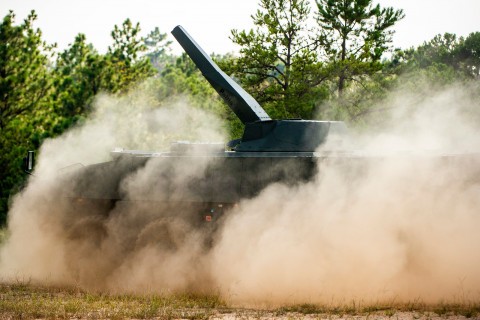
The first new vehicle type is the HUNTER infantry fighting vehicle from General Dynamics European Land Systems (GDELS). Patria is responsible for its assembly and maintenance in Latvia in cooperation with GDELS.
Greater production responsibility for Latvia
The development of vehicle production in Valmiera has been based on close cooperation with Patria’s operations in Finland. Before production of the 6x6 vehicles began, Patria transferred the necessary manufacturing technology and work instructions to Valmiera. Latvian employees visited Hämeenlinna to learn vehicle assembly and production methods.
Local subcontractors were also trained to manufacture vehicle components in accordance with Patria’s quality requirements.
According to Arnis Irbens, employees at the Valmiera factory have succeeded in earning the trust of their Finnish colleagues. As a result, the factory has been given greater responsibility.
Cooperation also works in the other direction. Efforts are made to share solutions and good practices developed in Valmiera with the Hämeenlinna factory.
“We have succeeded in building trust, and this has brought increasing responsibility for production to Valmiera. We also want to share our expertise and good practices with Patria’s other production units,” Irbens says.
According to Arnis Irbens, the Valmiera production directly serves orders from another CAVS country.
Patria’s network expands in Latvia
Patria in Latvia employs a combined total of nearly 100 people in Valmiera. Growth in production will require further recruitment in the future.
According to Irbens, the companies have been successful in recruiting skilled personnel, even though new employees do not necessarily have previous experience in the vehicle industry.
“What matters most is sound technical expertise and an interest in learning. An induction and mentoring plan is drawn up for each new employee to help them progress to more demanding roles.”
Patria cooperates with Valmiera’s technical school and a local higher education institution. Employees can develop their skills further at these institutions, while students are offered traineeships at the production facility.
Patria cooperates with Valmiera’s technical school and a local higher education institution.
Alongside its own production, Patria has also expanded its subcontractor network in Latvia. The Valmiera factory currently sources products from around eight local suppliers. Their products include armoured vehicle hulls and other metal structures.
“The heaviest vehicle components are manufactured in Latvia. They are also supplied to the Hämeenlinna production facility,” Irbens says.
Lifecycle services as part of the overall package
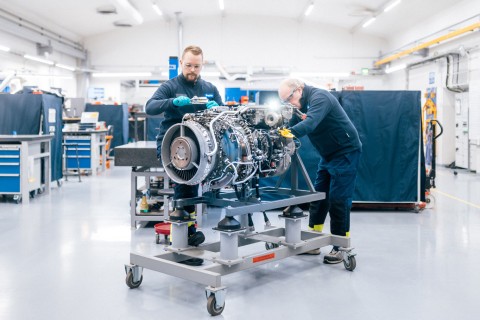
Alongside vehicle manufacturing, maintenance and lifecycle services are being developed in Valmiera. Valmiera site is responsible for these services, which include scheduled vehicle servicing, more demanding maintenance work and system upgrades.
“If a customer wants to install new systems in a vehicle or make other modifications, the vehicle can be sent to us for upgrading,” Arnis Irbens explains.
Lifecycle services literally cover the fleet’s entire lifecycle, which spans several decades in military use. Reliable vehicle maintenance therefore forms a long-term part of Patria’s cooperation with its customers.
According to Irbens, employees have begun finding their own solutions to complex production challenges. These experiences and practices are also shared with the Hämeenlinna factory.
Reliable vehicle maintenance forms a long-term part of Patria’s cooperation with its customers.
“As the CAVS programme expands, vehicles will probably be manufactured in more countries than at present. I hope the Valmiera factory will find its own role in this growth and potentially transfer its expertise to countries where Patria or its partners establish new production facilities.”
Irbens’ goal is for Valmiera to become known as a competence centre that supports Patria’s other units and local companies and works closely with educational institutions.
What did you like about the article?
Thank you for your opinion! You can share the article on social media using the buttons below: