







Security of supply is sustainability in practice at Patria
13.10.2026
A defence company must be able to deliver products and services to its customers even in exceptional circumstances. Patria strengthens security of supply by building disruption-resistant supply chains and safeguarding continuity of production.
When sustainability is discussed, the focus is often on environmental, social and governance issues. In the defence industry, it also fundamentally includes the ability to help maintain society’s security and security of supply in all circumstances.
– For Patria, resilience means security of supply in practice. We are able to provide solutions and capabilities that enable our customers to operate in demanding conditions, summarises Johanna Arola, Patria’s Vice President of Sustainability.
For Patria, ensuring operational capability has always been at the core of the business.
Russia’s war of aggression against Ukraine has permanently changed Europe’s security environment and highlighted the importance of resilience. In the defence industry, however, this is not a new sustainability theme.
– For Patria, ensuring operational capability has always been at the core of the business.
Supply chains must withstand disruption
One of the cornerstones of resilience is securing the supply chains required for production.
As in many other industries, defence products are built on long and often global supply chains. A disruption in the availability of even one critical material, component or service can affect production.
According to Johanna Arola, material procurement must also prepare for situations in which the usual supply channels are unavailable. Alternative sourcing channels are therefore also needed.
Patria also examines dependencies extending beyond the first tier of suppliers in its supply chains. This supports the development of supply chain resilience, security of supply and risk management.
Cooperation strengthens European industry
Strengthening Europe’s own defence industrial capacity has become a key objective in the changed security environment. The aim is to enable European industry to produce the defence materiael required more quickly and on a larger scale.
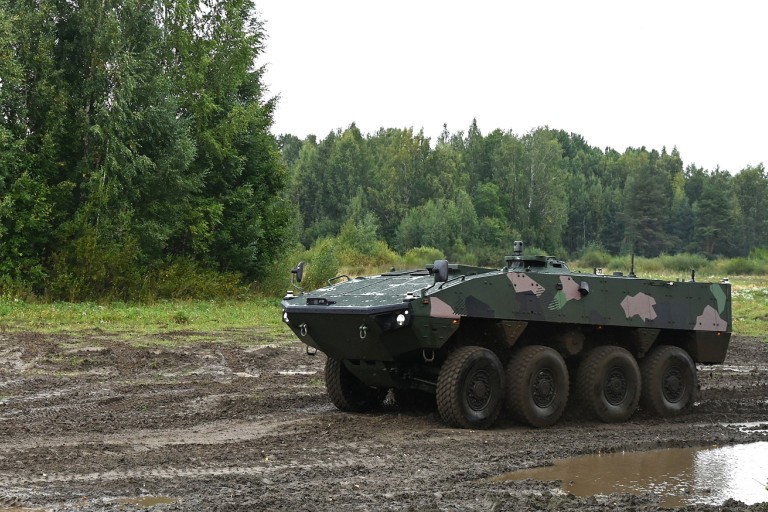
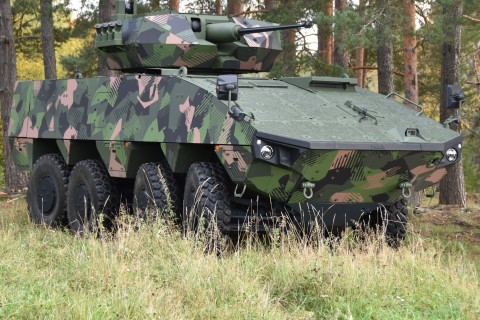
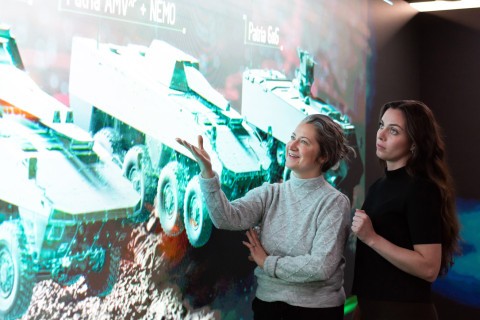
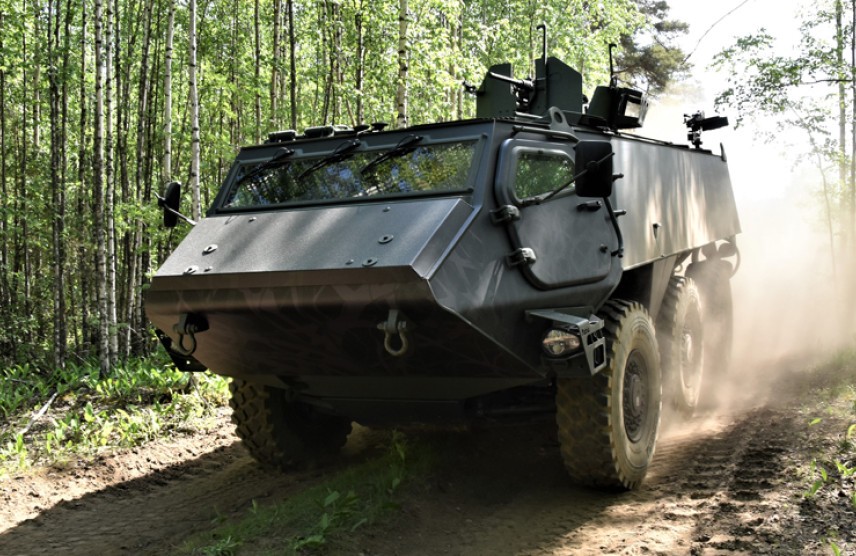
Multinational joint programmes in which Patria is closely involved contribute to these objectives. Finland and Patria have, for example, a leading role in the CAVS programme, in which participating countries develop and procure armoured vehicles based on the Patria 6x6 platform.
Patria has a leading role in the CAVS programme and the industrial lead in the FAMOUS programme.
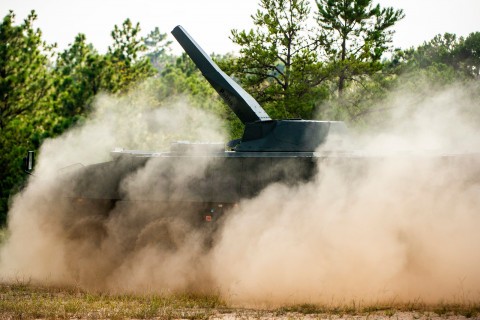
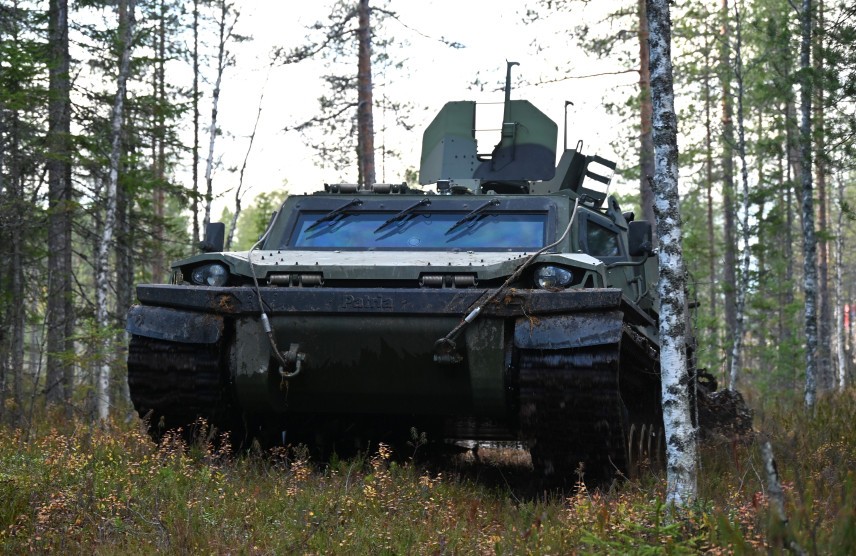
Patria also has the industrial lead in the FAMOUS programme, supported by the European Defence Fund. The programme is developing the next-generation tracked Patria TRACKX vehicle, which can operate in Arctic and other demanding environments.
– Cooperation programmes such as these create opportunities for broader European industrial and maintenance cooperation, Arola notes.
Local production strengthens security of supply
In international vehicle programmes, Patria’s operating model often involves manufacturing or assembling the vehicles together with industry in the customer’s home country. At the same time, local partners receive the expertise required for production and maintenance.
– The transfer of technology and expertise strengthens security of supply well into the future. Local production also creates employment and reinforces the customer country’s own industrial base, Arola says.
In addition to vehicle deliveries, Patria can offer customers a long-term lifecycle services solution. In this model, Patria is responsible for maintaining, repairing and servicing the equipment for an agreed period.
The transfer of technology and expertise strengthens security of supply well into the future.
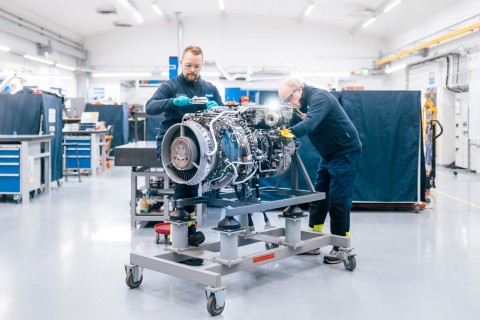
Lifecycle services are also a significant part of Patria’s business. The company maintains, services and modernises equipment including armoured vehicles. In Finland, Patria also plays a significant role in maintaining the Finnish Air Force’s aircraft fleet.
Defence equipment is often in service for decades. During that time, the operating environment, technology and customer needs change. Products must therefore be designed from the outset so that they can be maintained, repaired and upgraded throughout their service life.
Patria can provide efficient maintenance infrastructure and skilled specialists to support this.
Preparedness for exceptional circumstances begins in normal conditions
The importance of resilience is also evident in Patria’s own operations. As a company critical to security of supply, Patria must prepare for situations in which production, logistics, energy supply or other prerequisites for normal operations are disrupted.
At Patria, preparedness is guided by business continuity management. Its aim is to ensure that critical operations can continue in a range of disruption scenarios.
Operational capability in exceptional circumstances is built under normal conditions.
Patria is also a strategic partner of the Finnish Defence Forces, which guides preparedness planning. This covers preparedness in peacetime, the various stages of raising readiness and operations in exceptional circumstances.
According to Johanna Arola, the basic principle is simple: operational capability in exceptional circumstances is built under normal conditions.
This means identifying critical operations and dependencies and planning alternative ways of working in advance. In this way, business continuity management builds the ability to continue operating both during disruptions under normal conditions and in exceptional circumstances
Text: Matti Remes
What did you like about the article?
Thank you for your opinion! You can share the article on social media using the buttons below: