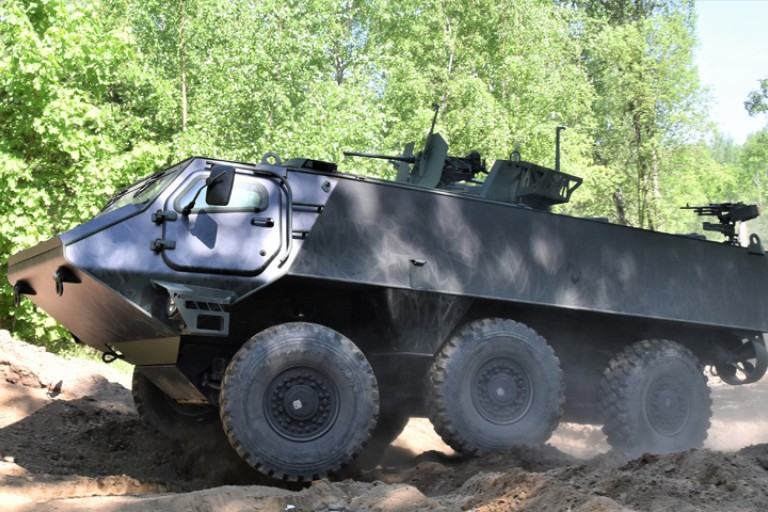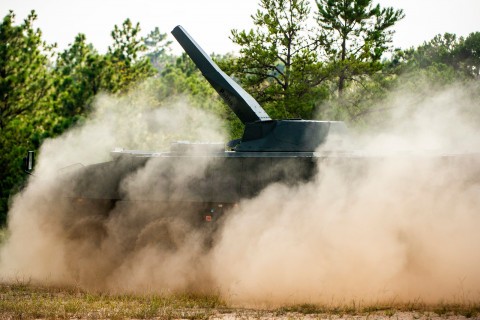
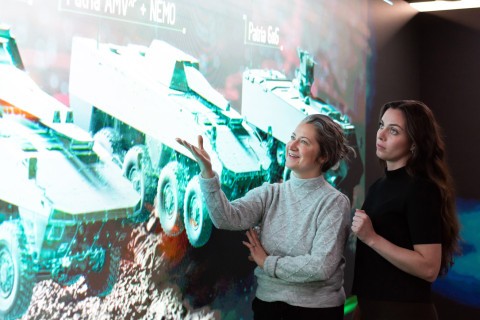










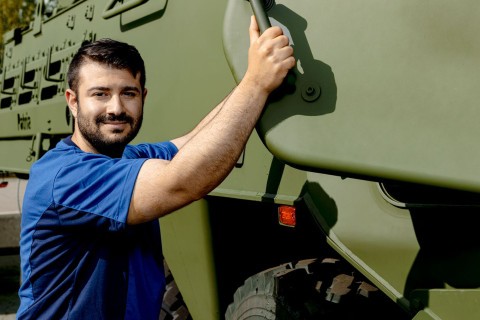





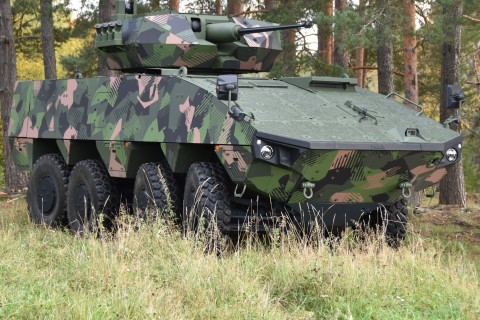
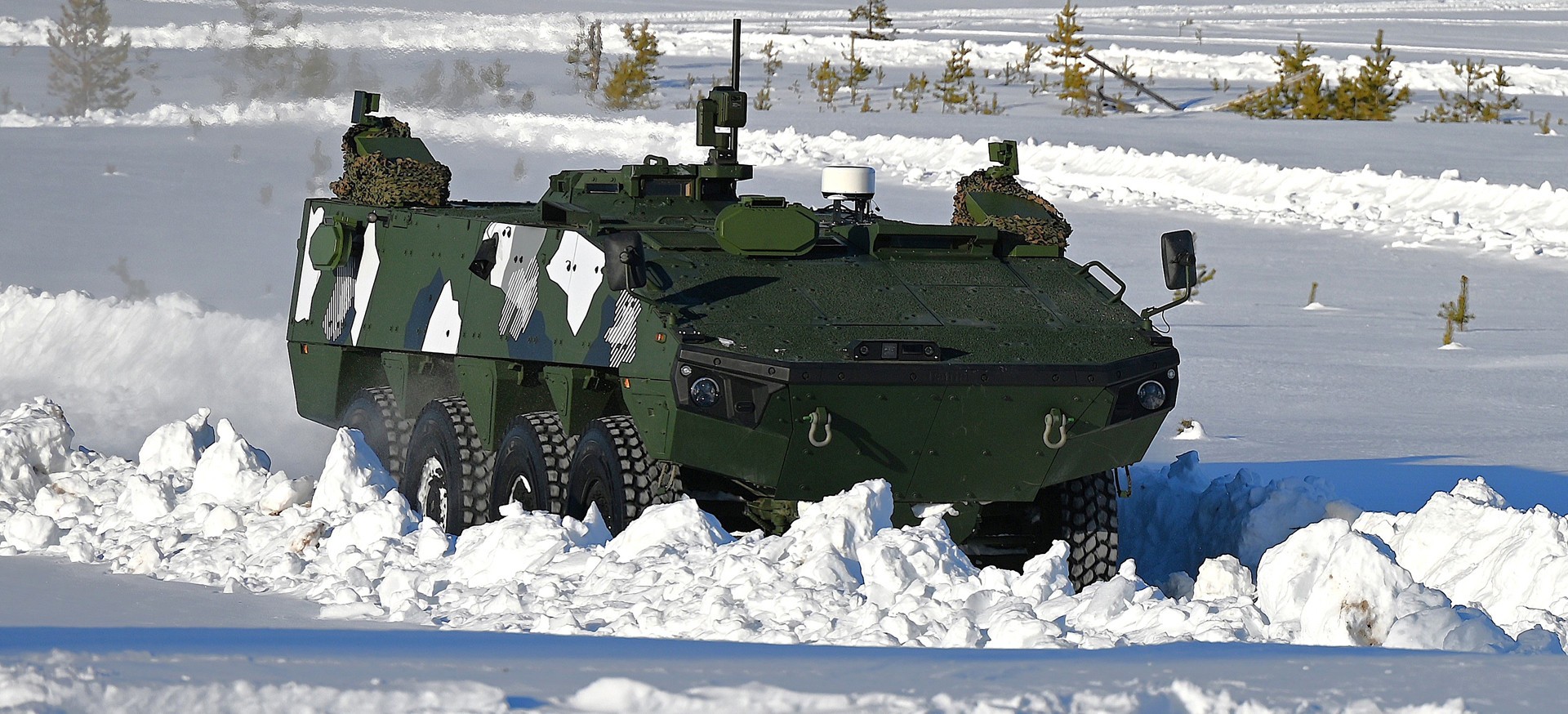
Patria’s unmanned solution can be integrated into all Patria AMV XP 8x8 and Patria 6x6 vehicles without any major changes in the vehicle configuration.
Jan Erola, Nordic Defence Review
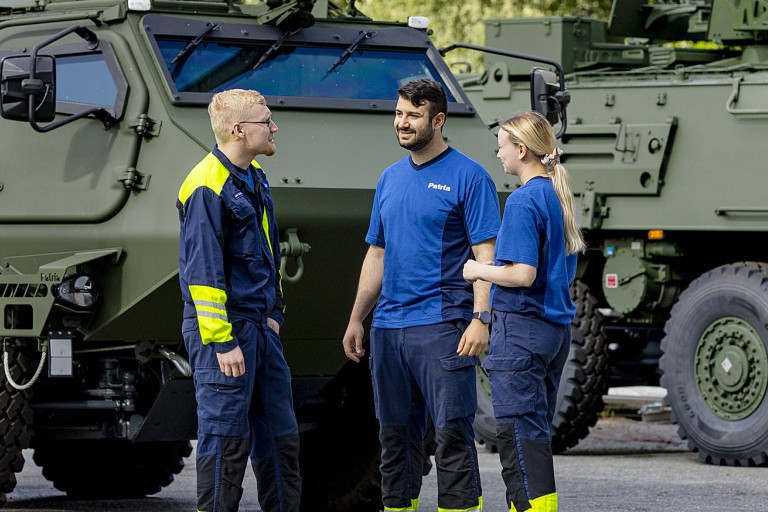
– We believe unmanned functionality will be integrated into our existing armoured vehicles, such as Patria’s 6x6 and the tracked vehicle TRACKX, says Matti Saarikko, Patria’s Chief of Technology. We already offer drive-bywire capability for large vehicles, he explains.
It is not a black-and-white choice between human-operated and unmanned. When driving long distances, for example, automated control can ease the burden on drivers.
We already offer drive-bywire capability for large vehicles.
– In poor conditions and in the dark, a conscript with only brief training, or otherwise inexperienced drivers may lack extensive experience, and the vehicle may be carrying others whose safety the driver is responsible for, Saarikko says.
In crisis situations, there are many kinds of pressure. If the driver has some form of assistance, it helps. The system can also operate fully autonomously.
– You need to be able to anticipate when connectivity is available, for instance to use updates to map data. By combining multiple data‑link options, including secure connectivity and edge technologies, operations can be sustained even with very limited data rates, Saarikko explains.
– Autonomous ground systems face challenges on an entirely different scale than airborne systems, says Kari Grön, Patria’s Vice President of Product Management and Engineering.
Terrain defines the problem. Air offers freedom of movement and stable links. Land forces face mud, ditches, fences, trees and constant uncertainty. Every metre becomes a decision point.
A human walking through a forest reads the ground instinctively. A machine must be taught or must learn to judge depth, softness, edges and risk. That requires sensing, processing and decision-making capacity at a level that still stretches current systems.
– All of this has to be programmed today,” Grön notes.
Ground-based unmanned systems trail aerial drones in maturity and scale. Maritime systems sit between the two, yet remain more predictable than forests, rubble or dense urban terrain. Land remains the most complex environment for autonomy, and that complexity slows development and deployment.
Ground warfare consumes mass. It demands presence, persistence and the ability to absorb loss. That drives the logic of expendable systems.
If systems are meant to be sacrificed, they cannot be expensive, Grön says.
The lesson from drones applies as a philosophy rather than a direct copy.
Commercial drones cost hundreds. Military-grade systems can cost tens of thousands once standards are applied, from electromagnetic compability protection to environmental tolerance. That gap limits scale and distorts design priorities. Swarming concepts only work if unit cost supports attrition and rapid replacement.
Grön sketches the ground equivalent: dozens of small vehicles, semi-autonomous or remotely controlled, each carrying limited payload. Some will fail. Enough must succeed.
Reliability becomes statistical. An 80–90 per cent success rate may be sufficient if numbers compensate and missions are designed around redundancy.
This logic clashes with procurement culture. European acquisition remains optimised for high-value, long-life systems. Contracts take years. Requirements are fixed early. Certification dominates development timelines.
– In one or two years, not much happens, Grön says. We are constantly late in the current world situation.
War-driven development cycles run at three to six months. Procurement cycles run far longer. By delivery, concepts have shifted and technologies have evolved. Innovation moves to users and rapid experimentation environments where iteration is continuous, and failure is accepted as part of progress.
The gap raises questions about responsibility and risk. Who authorises testing of autonomous systems carrying explosives in peacetime? Which authority accepts reduced standards for expendable systems?
Regulation is designed to prevent failure. Swarming concepts assume it and build effectiveness through numbers.

One answer emerging from industry is structural redesign. Closer interaction between users and industry, rapid prototyping and iterative development must become standard practice. Requirements should evolve alongside testing. Procurement must accept variation and incremental improvement instead of fixed perfection at delivery.
– At national level, changing procurement processes for expendable systems may be possible, Grön argues.
National approaches can move faster than alliance-wide reform. That creates a pathway where experimentation at national level feeds into broader standardisation over time.
A concrete mechanism already exists. The joint Common Armoured Vehicle System (CAVS) programme shows how multinational cooperation can accelerate acquisition and bypass rigid procedures. A similar framework for unmanned ground systems would enable shared development, pooled demand and faster deployment across multiple countries.
We should ask how an autonomous system performs a task that a human performs today, Grön reframes the core question.
That shift moves thinking beyond support roles and towards new operational concepts.
Ground autonomy will not mirror the drone revolution. It will define its own path, shaped by terrain, cost, autonomy and speed. The side that adapts procurement, accepts iteration and builds mass will close the gap first.