From innovation to battlefield: How to get defence innovation into use faster
21.10.2026
The war in Ukraine has cut defence technology development cycles to months, sometimes weeks. Yet in Finland and elsewhere in Europe, promising ideas can wait years for procurement decisions, industrial investment and military deployment. Faster decisions, shared industrial risk, funding for trials and closer cooperation could break the logjam.
Jan Erola, Nordic Defence Review
Patria has changed how it works in response to Ukraine. Reima Kuutsa, Patria’s Director of NATO Affairs, said the company seeks feedback directly from Ukraine's armed forces and defence industry and has reorganised to act faster. “Last summer we changed our organisation to allow faster internal decisions and responses to new challenges,” he told the Europe Forum in Turku in 2026.
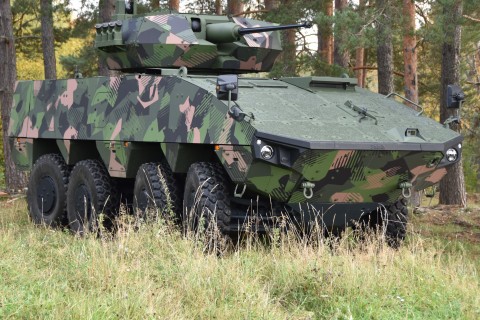
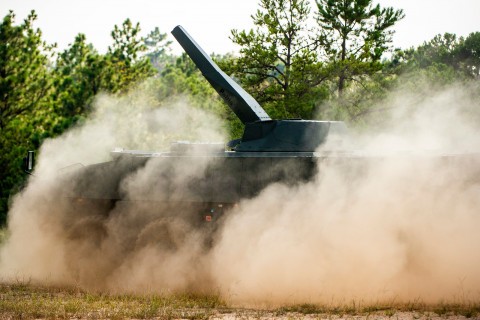
Drones are the war's most visible innovation, but they depend on a wider system. “Drone warfare needs good sensors,” Kuutsa said. It also needs power, safe charging sites, logistics, communications and a battlefield picture extending well beyond the immediate threat. Patria wants to integrate these technologies into mobile and fixed combat systems. “Integrate all these technologies into the weapons systems and equipment on the battlefield. That is the key to victory.”
Nokia's Program Director, Veli-Pekka Luoma stressed secure two-way communications, sensor networks and AI under human control. “Connectivity, secure connectivity, and AI, but with humans in command,” he said. MEP and former general Pekka Toveri warned against overrating individual systems: “You cannot win a war with drones.” What matters is information flow, command, artillery, troops and the ability to replace losses.
Rear Admiral Tuomas Tiilikainen, commander of the Finnish Navy, warned that even a superior drone can become obsolete within weeks. Procurement must therefore accept that some systems will last three to five years rather than 30. Otherwise, armed forces risk stockpiling equipment that soon becomes outdated.
No orders, no production
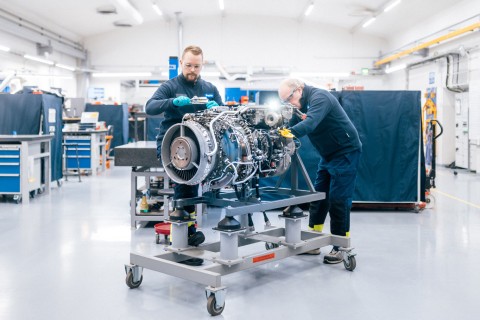
Europe's defence industry still operates largely on peacetime assumptions. Firms await budget decisions and firm orders before investing. “It is difficult for arms manufacturers in Finland and elsewhere in Europe to make investment decisions without an order,” Kuutsa said. Patria's new factory in Hämeenlinna shows what predictable demand can achieve.
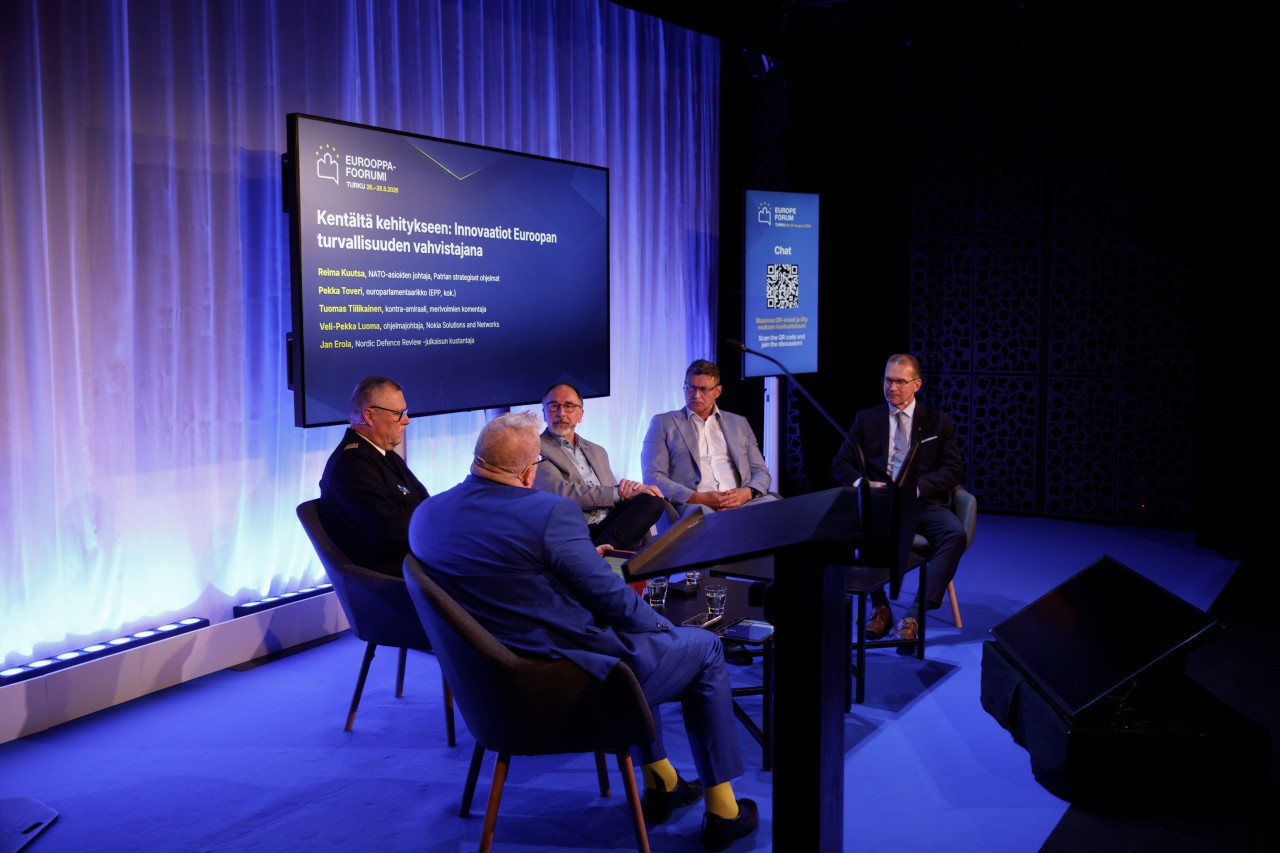
Moderator Jan Erola with panellists Tuomas Tiilikainen, Pekka Toveri, Veli-Pekka Luoma and Reima Kuutsa during the panel discussion "From practice to progress: Innovations strengthening Europe’s security". Photo: Jaska Poikonen.
Kuutsa proposed a new contract model: governments would pay not only for equipment but also for the ability to expand production rapidly in a crisis. If a factory must be ready to double, triple or quintuple output, the cost of idle capacity must be shared in peacetime. “The customer also takes, or shares, that risk,” he said.
Toveri argued that governments cannot expect markets to build military production capacity unaided. “This will not happen by itself. The state must be involved.” Ukraine shows how quickly units can develop drones in their own workshops. The next challenge is developing successful prototypes and scaling up production while maintaining consistent standards.
Speed does not remove safety obligations. Kuutsa said start-ups can build prototypes while initially bypassing some military standards. A strategic supplier such as Patria must ensure cyber security, reliability and safe operation before delivery. Tiilikainen said professional soldiers can learn new equipment in a week, but training a large reserve, maintaining and storing it take longer.
The bottleneck is often in decision-making
Finland particularly lacks staff to prepare procurement and policy decisions, Kuutsa argued: “Decision-makers need more resources.” Luoma said the critical measure was time from prototype to industrial product. “Resources multiplied by time deliver capability.”
Toveri called for an accessible point of contact for businesses within the Defence Forces, with more funding for trials and product development. Tiilikainen said a single-entry innovation unit had opened in early 2026. “We have a phone number and a single point of contact,” he said. Kuutsa called for more staff for the unit.
Innovation succeeds when it helps troops survive and complete their missions.
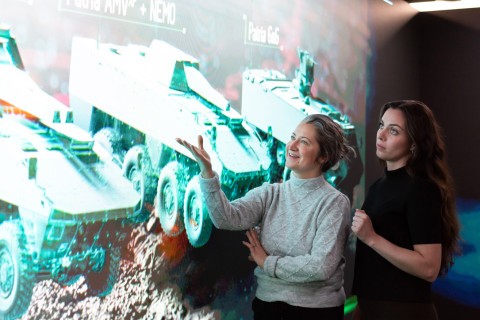
Through its Business Finland backed eALLIANCE programme, Patria is bringing together over 70 companies and research bodies to find technologies that could become defence products. Luoma likened a strong ecosystem to an oak supported by a network of fungi. Nokia is building defence activities around 5G, sensors and 6G, alongside links to NATO's DIANA testing network. “I would argue that Nokia is the new Nokia,” he said, responding to calls for another Finnish technology champion.
Kuutsa identified another export obstacle: Finland lacks a government-to-government (G2G) sales model. Many buyers want a state counterpart. “We lose several contracts because Finland has no such model,” he said. Tiilikainen agreed that overseas customers were waiting: “Our industry has plenty to sell that people would buy if G2G were possible.”
Finland's advantage lies in integration
Tiilikainen named space, communications and cryptography as Finnish strengths. Toveri added AI and quantum computing but put integration first: faster situational awareness and decisions are what count. Luoma emphasised autonomous systems and adapting civilian technology for defence. For Kuutsa, an innovation succeeds when it helps troops survive and complete their missions.
Toveri also urged a genuine European single market for defence and a halving of overlapping weapons-system models. Ukraine’s lesson for Finland and Europe is that the advantage lies with those who can put new ideas into soldiers’ hands, produce them at scale and develop replacements before the originals become obsolete.
What did you like about the article?
Thank you for your opinion! You can share the article on social media using the buttons below: