




Patria’s Panu Routila: Defence technology is now developing at tremendous speed – and encouragingly often through joint efforts
7.9.2026
There are still differences in Europe in how quickly and determinedly countries respond to defence and security issues, says Patria’s President and CEO Panu Routila.
According to Routila, some European countries have been preparing for a long time, while others are only now stepping up the pace.
– The direction is nevertheless clear: strengthening defence is no longer just a political talking point, but is increasingly reflected in concrete decisions, orders and joint projects, he sums up.
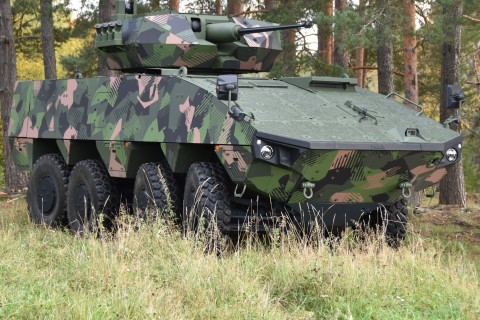
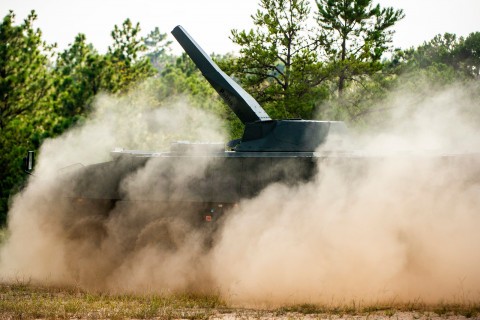
Routila took part in the NATO Summit in Ankara in July, where this change became very tangible. Several important agreements were signed at the meeting in Türkiye, including the letter of intent between Finland, Norway and Latvia on the development of and cooperation around the Patria TRACKX tracked vehicle.
– This is a good example of the direction in which European defence should develop: towards common requirements, joint development, joint procurement and better interoperability.
On a united front
Routila believes that unity is created above all through action. When countries identify the same capability need and commit to a common solution, cooperation quickly moves from theory to practice.
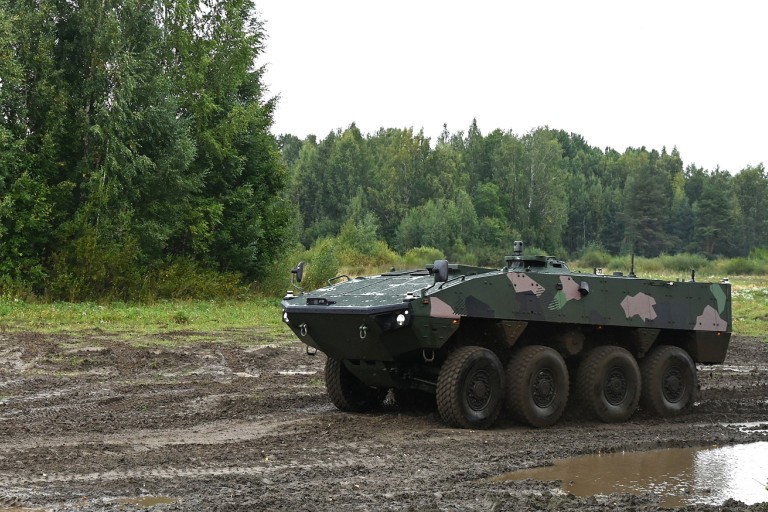
– The EU-funded multinational CAVS vehicle programme is already a good demonstration of this, and the TRACKX cooperation is being built on the same foundation.
From Patria’s perspective, Finland’s NATO membership has facilitated industrial cooperation within the ecosystem of NATO countries and strengthened the role of Finland and Patria particularly in solutions suited to Arctic conditions, lifecycle support and advanced technologies. Patria has long operated in several NATO countries, but membership has made cooperation even more “natural and strategic”, Routila describes.
The winds of war are lifting the defence industry – but according to Routila, this is not a temporary market phenomenon, but the consequence of a more permanent change in the security environment.
From Patria’s perspective, Finland’s NATO membership has strengthened industrial cooperation within the NATO ecosystem and Finland’s and Patria’s role in Arctic solutions, lifecycle support and advanced technologies.
– In my view, the greatest untapped potential in the defence sector lies in Europe learning to act more collectively in defence. Individual countries or companies cannot, on their own, meet all the needs that have now emerged.
Industrial scale shows its strength
Another major area of potential is related to industrial scale: in many areas of defence, the focus has shifted from project-based work to a situation where genuine industrial capacity is needed – not only in companies’ own factories, but across the entire subcontracting chain.
– From Patria’s perspective, technology transfer, partner networks and local production are ways both to strengthen customers’ security of supply and to rapidly increase delivery capability, Routila says.
A third source of untapped potential lies in innovation. The war in Ukraine has shown how quickly the requirements of warfare can change:
– Uncrewed systems, artificial intelligence, electronic intelligence, passive sensors and system interoperability are areas where Europe has a great deal to develop – but also a great deal to gain. Growth in the defence industry can simultaneously strengthen security, generate exports, create jobs and increase European technological self-sufficiency.
Keys to the battlefield
According to Routila, a key lesson from Ukraine is that no single system is decisive; impact is created by the whole: information must be collected, shared and used quickly as part of command and control and effect generation.
– Drones alone do not decide a war; their use also requires protected mobility, such as armoured vehicles.
This development also aligns well with Patria’s key expertise: the company develops uncrewed systems and drone capabilities as part of a broader defence system.
– In this way, sensors, communications links, data, artificial intelligence and platforms work together even in contested and rapidly changing conditions.
The Artificial Intelligence Warfare Adaptive Swarm Platform project, known as AI-WASP and led by Patria, is one example of where defence technology is heading.
– In the future, systems will be needed that combine artificial intelligence, secure communications, situational awareness, electronic protection and countermeasures into a single scalable solution, Routila says.
The Artificial Intelligence Warfare Adaptive Swarm Platform project, known as AI-WASP and led by Patria, is one example of where defence technology is heading.
In AI-WASP, which has received around EUR 45 million in EU funding, Patria leads a consortium of 16 European actors. The project strengthens Europe’s ability to operate in a modern, multidimensional and electronic warfare environment.
Kouvola accelerates the discussion
Patria has long been a sponsor of the Kouvola Security Conference – and according to the President and CEO, the event has earned its place as “one of Finland’s most important arenas for security discussion”.
– The Kouvola Security Conference has succeeded in keeping the discussion firmly at the heart of security and defence. It brings together a broad group of decision-makers, experts and other actors to address topical issues from a concrete perspective, Routila reflects.
What did you like about the article?
Thank you for your opinion! You can share the article on social media using the buttons below: