

Kaido Kullam,
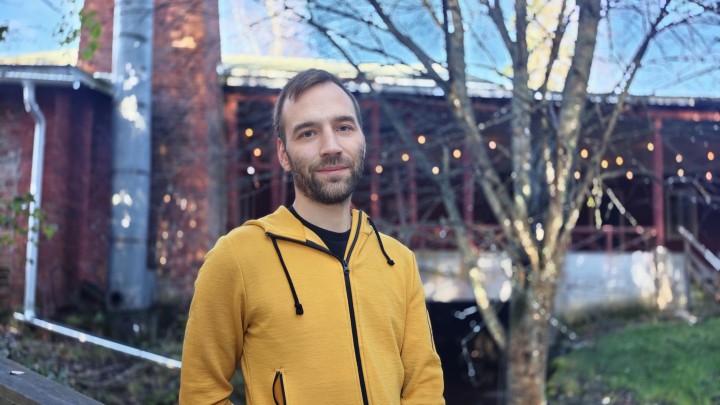
Kaido Kullam has witnessed the development of the drone industry from the very beginning
Kaido Kullam has developed drones from the first devices built by hobbyists to today’s advanced systems. His extensive experience is valuable in his work as a drone specialist at Patria.
2
years at Patria
Senior Mechanical Designer
Foundry patternmaker
Gardening and DIY building projects
When Kaido Kullam, who was interested in radio-controlled helicopters, saw his first multi-rotor aircraft, the impact was immediate. “I thought it was absolutely incredible that the aircraft could maintain a near-stationary hover almost by itself. I immediately thought that I'd like to build one of those myself,” Kaido says.
In the early 2000s, ready-made drones, or even electronics designed for them, were not available. The devices were built using motors and propellers intended for model aircraft, along with other available components.
“Even the word ‘drone’ was not yet commonly known at the time.”
Drone development began in a garage
Through his hobby, Kaido met Juhani Mikkola, who later founded Nordic Drones. The two began developing a multi-rotor aircraft that would provide an entirely new platform for aerial photography.
“We developed the devices in a garage, mainly at weekends.”
Kaido trained as a cabinetmaker and foundry patternmaker. He also studied wood technology and worked for many years in an engineering workshop as a patternmaker. The work taught him independent design and how to understand complex systems.
"We developed the devices in a garage, mainly at weekends.
“When making a pattern, you have to be able to visualise the final product. This has also been useful in drone development. The parts are first designed as 3D models on a computer screen, then manufactured and assembled together.”
For Kaido, one of the most rewarding moments is seeing a design become a functioning device.
“When you see that all the parts, joints, and alignments come together exactly as planned, it feels great. And when you then manage to get the device flying, it is extremely motivating.”
A front-row view of drone development
Nearly two decades of working with drones has given Kullam a front-row view of the industry’s development. One of the early applications was land surveying, where drones enabled highly accurate imagery to be collected quickly and cost-effectively.
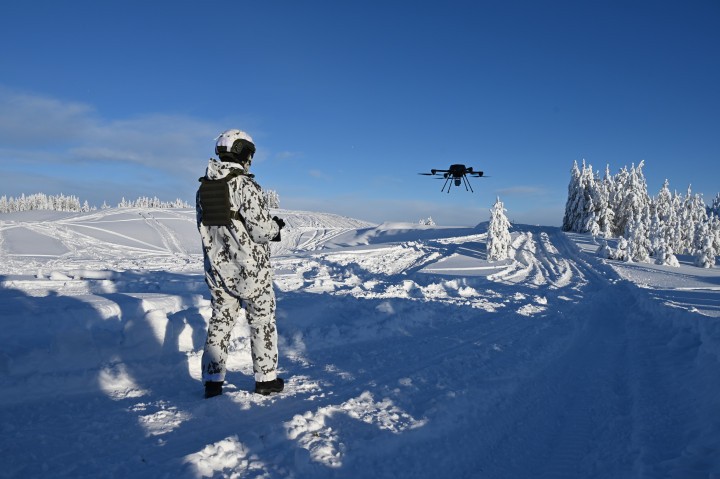
The next major step has been the shift in focus towards defence and public-authority applications. Nordic Drones began developing solutions for the needs of the Finnish Defence Forces even before Russia’s war of aggression against Ukraine began. The war rapidly increased the importance of drones in military use.
Nordic Drones became part of the Patria Group in autumn 2024. Joining Patria has opened broader networks for the company’s operations. At the same time, drones are increasingly being integrated into Patria’s and its customers’ systems.
Vibration and weight are the biggest challenges
Drone technology is developing rapidly, but designers still must contend with the same fundamental challenges. According to Kaido, the most difficult of these is the vibration generated by the propellers, which must not interfere with the sensors and cameras installed on the device.
“Another major challenge is the weight of the device when different payloads are integrated into it. We are constantly fighting over every gram. The lighter the aircraft can be made, the better its overall performance will be.”
Kaido’s extensive experience is particularly valuable when different devices and sensors are integrated into drones. Easy adaptability and the integration of different payloads are among the competitive strengths of Patria’s drones.
"The lighter the aircraft can be made, the better its overall performance will be.
Kaido has seen the drone industry evolve from aircraft built by hobbyists into a rapidly growing high-technology sector. When immersed in the work, it is not always easy to notice the extent of the change.
“In everyday work, you do not always realise how many exciting things you get to do here.”
His need to keep creating does not end at the workplace. Kaido previously enjoyed skydiving, but these days his free time largely revolves around his family and detached house.
“Every summer has brought a new building project, such as a woodshed, garden sauna, pergola or storage shed. Gardening is also one of my passions. If the lawn is looking good, the man is happy too.”
Text: Matti Remes